Tag Archive: AAIT Scaffold

  1. Scaffolding Hazards at Construction Sites & How to Prevent Them (2026 USA Guide)

    Comments Off on Scaffolding Hazards at Construction Sites & How to Prevent Them (2026 USA Guide)

    Scaffolding Hazards

    What Are Scaffolding Hazards at Construction Sites and How Can They Be Prevented?

    One of the most dangerous safety threats on U.S. building sites is scaffolding hazards. Some of these risks are falling from a height, the structure collapsing, tools or debris falling, getting electrocuted by above electrical lines, and overloading the platform. OSHA in the United States oversees scaffolding safety under 29 CFR 1926 Subpart L. This law has tight rules about load capacity, fall protection, inspections, and worker safety. Unsafe scaffolding has the potential that may result in serious injuries and in some cases can even be fatal. Hence proper fixing of scaffolding equipment and checking every scaffolding safety regulation is of utmost importance.

    Most injuries that happen on scaffolding in the U.S. can be avoided if the right systems, inspections, and OSHA-compliant practices are used. This guide talks about the most prevalent scaffolding dangers in the US and gives contractors clear ways to avoid them right now.

    What Are Scaffolding Hazards?

    Scaffolding hazards are safety dangers that come with putting up, using, and taking down scaffolding systems on construction sites. The most common dangers in the U.S. are:

    • Falls from high platforms
    • Scaffold falls because it is unstable
    • Tools or materials that fall
    • Being electrocuted by electrical lines close
    • Too much load beyond the rated capacity
    • Unsafe access or climbing the wrong way

    These dangers can cause serious injuries, OSHA fines, project delays, and lawsuits.

    Why Scaffolding Safety Matters in the United States

    OSHA said that falls are still one of the most common causes of injury and deaths on construction sites across the country. A lot of scaffold accidents happen because of:

    • No guardrails
    • Putting the planks in the wrong way
    • Foundations that aren’t stable
    • Not enough good inspections
    • Not paying attention to the load ratings from the manufacturer

    Even slight faults during installation can ruin the whole structure.

    Using engineered systems like ringlock scaffolding systems or certified frame scaffolding systems makes structures stronger and more compliant.

    OSHA Scaffolding Regulations (29 CFR 1926 Subpart L)

    29 CFR 1926 Subpart L of the Occupational Safety and Health Administration (OSHA) rules safety requirements for scaffolding in the United States.

    Some important OSHA rules are:

    • Scaffolds need to be able to hold their own weight and four times the maximum load they are meant to hold.
    • Platforms that are more than 10 feet above a lower level must have guardrails.
    • Before each work shift, a “competent person” must check the scaffolding.
    • You need to make sure there is a way to get to the area (steps or ladders).
    • There must always be a safe distance between electrical power lines.

    If you don’t follow these rules, you could face big fines and orders to quit working.

    The Most Common Scaffolding Hazards and How to Prevent Them

    1. Falls from Height

    Falls are the most common danger when using scaffolding in the U.S.

    Here are some reasons why:

    • No guardrails
    • Planks that are slippery or not safe
    • Instead of stairs, climbing frames
    • No protection from falling

    Prevention:

    • Put in full guardrail systems (top rail and mid rail).
    • Check and secure scaffold planks
    • Use access systems that meet OSHA standards
    • Make sure the platforms are clean and dry.

    2. Scaffold Collapse

    Structural failure can cause a lot of injuries and put you at a lot of risk for lawsuits.

    Causes:

    • Ground that is weak or uneven
    • There is no diagonal bracing.
    • Parts that are broken
    • Putting things together wrong
    • Too much loading

    Prevention:

    • Make sure the base plates and sole boards are put on correctly
    • Make sure that all levels are properly braced.
    • Follow the engineering specs given by the manufacturer
    • Check the vertical alignment

    Ringlock scaffolding and other modular methods make locking stronger and stop structures from moving.

    3. Falling Objects

    Tools, materials, and trash that fall from scaffolds are quite dangerous for workers below.

    Causes:

    • No toe boards
    • Tools that aren’t locked up
    • Platforms that are too full

    Prevention:

    • Put in toe boards
    • When you need to, use debris netting.
    • Keep platforms neat and tidy

    4. Electrocution Hazards

    If metal scaffolding is too close to live power lines, it can conduct electricity.

    Prevention:

    • Keep the required clearance distances.
    • When necessary, work with utility companies
    • Teach staff how to spot electrical dangers

    5. Overloading

    Every scaffold system has a maximum load it can hold.

    Going over this limit greatly raises the chance of collapse.

    Prevention:

    • Check the load charts
    • Spread out the materials evenly.
    • Use planking systems that are strong enough to hold up.
    • Don’t stack too many things on platforms.

    6. Unsafe Access

    When workers climb bracing or structural parts, the risk of falling goes up.

    Prevention:

    • Install scaffold stairs to stop accidents.
    • Use ladder systems that are safe
    • Don’t ever climb cross braces.

    Safe access methods cut down on falls by a lot.

    Scaffolding Injury Statistics in the United States

    According to OSHA, thousands of people in the U.S. hurt themselves on scaffolds every year, and falls are the most common cause. Most accidents happen because there isn’t enough fall protection, the foundations aren’t stable, or there isn’t enough inspection.

    Properly recognising hazards and following OSHA rules greatly lowers the number of accidents.

    Daily Scaffold Safety Checklist (U.S. Jobsite Ready)

    Before every shift:

    • Check the toe boards and guardrails
    • Check that the planks are safe and not broken.
    • Check the stability of the base plates and the soil.
    • Check the diagonal bracing
    • Make sure the load limits are not exceeded.
    • Make sure there is a safe distance from electrical lines
    • Check that an expert has done the inspection.

    One of the best ways to stop something from happening is to inspect it regularly.

    Choosing OSHA-Compliant Scaffolding Systems

    When choosing scaffolding systems in the US, contractors should look for:

    • Following ANSI and OSHA rules
    • Load ratings that were designed
    • Guardrail systems that have been certified
    • Heavy-duty planks
    • Locking mechanisms that can be changed
    • Galvanisation that doesn’t rust

    Putting money into systems that are rated correctly lowers the risk of having to deal with problems during inspections and in the future.

    OSHA Compliance By AAIT

    AAIT is a scaffolding equipment company in the USA that manufactures the finest quality equipment. Various types of scaffolding equipment that can be used in refineries, shipyards, construction companies, etc. are distributed by AAIT. Proper care and testing are done before the distribution of any component from the house of AAIT.

    OSHA regulations with regard to each component’s build-up quality are taken care of. Besides this, in case of a defect, AAIT provides individualized customer care. This way, any concerns regarding the quality and quantity of scaffolding equipment are mitigated.

    Frequently Asked Questions (USA-Focused)

    What OSHA standard covers scaffolding?

    29 CFR 1926 is the law that governs OSHA scaffolding. Part L.

    At what height are guardrails required in the U.S.?

    Scaffolds that are more than 10 feet above a lower level must have guardrails.

    Who can inspect scaffolding on a U.S. jobsite?

    OSHA says that a “competent person” must check the scaffolding before each shift.

    What is the most common scaffolding hazard?

    In the United States, the most common and dangerous scaffold-related danger is falling from a height.

    How can scaffold collapse be prevented?

    Proper foundation support, correct bracing, load control, and daily inspections all make the risk of collapse much lower.

    Final Thoughts

    One of the biggest safety risks in U.S. construction is still scaffolding. However, with proper planning, by complying strictly with OSHA requirements, and by employing certified systems, most accidents are avoidable.

    Contractors can also take precautions to ensure the safety of workers while keeping the contract running smoothly if they understand the risks associated with the consequences of falling, collapse, electrocution, falling objects, and overloading.

    Safe scaffolding means people are kept safe, accidents are reduced to a minimum, and all sites operate smoothly.
  2. Why AAIT is the best scaffolding parts manufacturer in the USA?

    Comments Off on Why AAIT is the best scaffolding parts manufacturer in the USA?

     Cuplock and Ringlock Distributors in the USA

    Scaffolding is an essential component in the construction industry, providing temporary support and access for workers to perform their duties. To ensure that scaffolds are safe and secure, it is crucial to have high-quality and reliable scaffolding equipment and parts. 

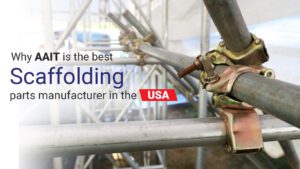
    AAIT, an American-based company, has emerged as a leading scaffolding parts manufacturer in the USA. With its extremely useful, durable, and high-quality scaffolding accessories, AAIT has been fulfilling the construction needs of companies and individuals on a large scale. 

    AAIT: Reliable scaffolding accessories distributor in the USA?

    This blog will discuss why AAIT is the best scaffold company in Houston and why you should consider them for all your scaffolding needs.

        1. High-Quality Products

    The quality of scaffolding parts is necessary for the safety of workers and the stability of the structure. AAIT has built a reputation for providing top-quality scaffolding parts that meet industry standards. Their products are made from high-grade materials that can withstand extreme conditions and rigorous use.  This means that all the scaffolding products at AAIT  are not only reliable but also durable, making them a cost-effective option in the long run.

        2. Wide Range of Products

    AAIT offers a wide range of scaffolding equipment and accessories to cater to different needs. They provide everything from scaffold frames, cuplock systems, ringlock system, tubes, clamp, planks, baskets, to ladder accessories. 

    AAIT has a comprehensive inventory of scaffolding parts, ensuring that they can meet the needs of construction companies of all sizes. Their diverse product range also means that they can provide solutions to unique scaffolding requirements that might be challenging for other manufacturers.

        3. Competitive Pricing

    AAIT is committed to providing high-quality scaffolding equipment at competitive prices. They have a pricing structure that is transparent and free from any hidden costs. Their pricing is competitive compared to other scaffolding parts manufacturers in the USA, making them an affordable option for companies that want to purchase scaffolding parts in bulk.

        4. Meeting Demands on Time

    Great emphasis is laid down by the cuplock and ringlock distributors in the USA on providing exceptional quality products on time. They understand that the construction industry is time-sensitive, and any delays or disruptions can have a significant impact on a project’s timeline. 

    Therefore, they ensure that their clients receive their orders promptly, and any issues are addressed promptly. AAIT is always willing to fulfill the demands of the customers timely.

        5. Commitment to Safety

    The scaffolding products manufactured by AAIT always meet safety standards. AAIT ensure that its products undergo rigorous testing and quality control checks before they are released into the market. Additionally, they provide safety guidelines and training to their clients to ensure that the scaffolding is set up and used correctly. 

        6. Experienced Team

    AAIT has a team of experienced professionals with vast knowledge in the scaffolding industry. They are always up to date with the latest technology and advancements in the field of scaffolding products manufacturing, which enables them to provide innovative solutions to their clients. 

    AAIT’s team of professionals can advise their clients on the best scaffolding parts for their specific needs.

        7. Bulk Production

    Several construction projects have unique needs, and sometimes standard scaffolding parts might not meet those needs. Therefore, AAIT offers scaffolding products in bulk to cater to the unique needs of its clients marking its presence as a reputed scaffolding accessories distributor in the USA. 

    They have a team of engineers who can design and manufacture scaffolding parts in bulk that meet their client’s ever-growing and huge requirements.

    AAIT has proven to be the best scaffolding parts manufacturer in the USA due to its high-quality accessories, wide range of equipment, competitive pricing, meeting deadlines, commitment to safety, experienced team, and bulk production. 

    If you are in the construction industry and looking for reliable scaffolding parts, consider partnering with AAIT for all your scaffolding needs.

    Contact Cuplock and Ringlock Distributors in the USA

    AAIT is not only known for being the best scaffolding accessories and equipment manufacturer, but also a prime distributor of cuplock system and ring lock systems across the USA. 

    Ringlock and Cuplock systems manufactured by AAIT are extensively used in the construction industry. AAIT offers high-quality cuplock and ring lock systems that are reliable, durable, and meet all safety standards. 

    If you are interested in knowing more about the products offered by AAIT or looking for a bulk supplier of scaffolding parts, then contact AAIT today for more information and best deals.

  3. Tips to Ensure Safety and Prevent Falls When Working on Scaffolding System

    Comments Off on Tips to Ensure Safety and Prevent Falls When Working on Scaffolding System

    scaffold distribution

    Scaffolding is a necessary tool for many construction jobs, providing a platform for workers to perform tasks at heights that would otherwise be impossible or extremely dangerous. However, working on a scaffolding system can also be dangerous if proper safety measures are not taken. Falls are the most common cause of injury and death on construction sites, and scaffolding accidents are no exception. 

    How to prevent falls and injury when working on a scaffolding system?

    As a scaffolding distribution company, AAIT believes that the key to preventing falls and injury is to ensure that workers are properly trained and equipped with the right scaffolding system. This blog will discuss how to prevent falls and injury when working on scaffolding, focusing on the cuplock scaffolding system and the ring lock scaffolding.

      1. Proper Training and Certification

    The first step to preventing falls and injury when working on scaffolding is to ensure that workers are properly trained and certified. This includes understanding the risks involved in working on scaffolding, how to properly set up and dismantle the scaffolding, and how to safely use the scaffolding system. 

    In addition, all workers should be certified in scaffolding safety by a recognized training provider. This certification ensures that workers have the necessary knowledge and skills to work safely on scaffolding.

      2. Regular Inspections

    When working on scaffolding, it is necessary to perform regular inspections of the scaffolding system. This includes inspecting the scaffold before use, after any alterations, and at regular intervals throughout the workday. 

    Inspections should focus on the scaffold’s structure, ring lock scaffolding, bracing, guardrails, and platforms. Any issues should be immediately addressed and resolved before work continues.

      3. Use the Right cuplock scaffolding system and ring lock scaffolding system

    There are several types of scaffolding systems available, including cuplock scaffolding and ring lock scaffolding. The cuplock scaffolding system is ideal for high-rise buildings and complex structures, while the ring lock scaffolding is perfect for simpler structures like bridges and walkways. Choosing the right scaffolding system ensures that workers can work safely and efficiently.

      4. Inspect the scaffolding before use

    Before starting work on the scaffolding system, it is important to conduct a thorough inspection to ensure that it is in good condition and safe to use. Inspect the scaffolding for any damage, such as missing parts, bent or cracked components, or loose bolts. If any defects are found, do not use the scaffolding until it has been repaired or replaced.

      5. Use Proper Personal Protective Equipment (PPE)

    Using proper personal protective equipment (PPE) includes hard hats, safety harnesses, and non-slip footwear. All PPE should be properly fitted and regularly inspected for wear and tear. Wearing proper PPE can greatly reduce the risk of injury in the event of a fall.

      6. Follow Proper Work Practices

    To follow proper work practices it is crucial to never overload the scaffold, not use makeshift platforms, and not use the scaffold for purposes other than what it is intended for. In addition, workers should always maintain three points of contact when climbing the scaffold, and should never lean out over the guardrails.

      7. Follow OSHA regulations

    The Occupational Safety and Health Administration (OSHA) has regulations for the safe use of scaffolding. Make sure to follow these regulations, including regular inspections and maintenance of the scaffolding, using proper access and fall protection equipment, and following safe work practices.

      8. Maintenance and Repair Services by a scaffolding equipment company

    Regular maintenance and repairs are imperative for ensuring the safety and longevity of the scaffolding system. The regular maintenance and repair services by a renowned scaffold distribution company ensure the scaffolding is properly maintained and any issues are quickly resolved. This helps to ensure that the scaffolding is always safe and reliable for workers to use.

    Contact the best scaffold distribution company for your requirements.

    Preventing falls and injury when working on scaffolding requires a combination of proper training, regular inspections, using the right scaffolding system, wearing proper PPE, and following proper work practices. 

    AAIT is a leading scaffold distribution company in usa that is committed to providing clients with the highest quality scaffolding systems and training services to ensure their workers can work safely and efficiently. Remember, safety should always be the top priority when working on scaffolding.

  4. Common Scaffold Tower Mistakes and How to Avoid Them

    Comments Off on Common Scaffold Tower Mistakes and How to Avoid Them

    AAIT-Technocraft-blog-image-2

    A scaffold tower is an independent scaffold that consists of pre-fabricated scaffold components. These components are connected to build an accessible and movable system. These towers are used in heavy-duty on-site applications (like, installing ceiling fittings), where standard ladders aren’t enough. 

    The scaffold towers have multiple advantages, including-

    • Greater height, stability, and strength
    • Easy assembly and disassembly
    • High versatility
    • Light in weight and movable
    • High durability 
    • Made with non-corrosive materials

    However, these advantages can be jeopardized if the safety rules are compromised. This blog shall infer on most common mistakes made while handling scaffold towers along with some safety tips.

    Most common mistakes when using a scaffold tower

    Here are some mistakes that scaffolders should avoid when using scaffold towers.

         1. Introducing heavy objects on the tower to increase its height

    The ascent and descent using your access scaffolding equipment could be time-consuming. Given this, it is understandable why one could be tempted to use any available object, such as a chair or a plastic box, to increase their height. We understand the temptation, but it does not mean we believe you should give in to it. 

    A dependable stepladder, for instance, is not intended for usage atop an access tower, but rather on the ground. Using unanticipated items such as chairs or crates could place you in a perilous scenario. Keep away from the hazards!

         2. Using the scaffold tower when there are heavy winds

    We are not claiming that scaffold towers are incapable of withstanding heavy winds; this is frequently considered during the design phase. While the weather deteriorates, it is risky to perform work at a height when the wind speed is high. 

    If the winds become too strong, you should delay your work. The power of the wind alone may throw you off balance, and it could also send pebbles, dust, and other small objects at you at the worst possible moment. Avoid becoming one of the thousands of employees who have died from falls from a height during the past five years.

    Moreover, scaffolding is prone to several hazards at construction sites which can be prevented if adequate care is taken during and after its construction.

         3. Not calculating the safe working load

    Like ladders, scaffolding towers have a maximum weight capacity that must be observed. Thankfully, the vast majority of people can escape the grave danger of exceeding a ladder’s weight capacity. Keep everything on the scaffold tower for a short time, as removing it could compromise the platform. A fall of tools or materials could pose a hazard to those below.

         4. Buying cheap scaffold towers

    When it comes to accessing equipment, you should always invest a bit more than you would normally. In fact, we previously discussed on the blog why you should always invest in a quality ladder, and it boils down to the same principle: if you’re dedicating your life to it, you should never settle for a low-cost one.

         5. Scaffolders are untrained

    Understanding the structure of the site and how to operate the relevant equipment is crucial for every construction worker. On scaffolding, untrained personnel is less likely to identify danger warnings, be aware of their surroundings, and wear fall protection.

    At first glance, scaffold towers may appear more sturdy and durable than ladders, but do not assume they can sustain the same weight or power. Avoid jumping up and down or throwing heavy objects from a great height; they were designed to support the weight of a person standing still and making steady, planned movements.

         6. Neglecting the external dangers

    When a scaffold tower is constructed, it can reach heights so magnificent that they are almost intimidating. At this height, there is a high potential for electrical operations to be hazardous. Even though injuries experienced in this manner are typically less serious, the damage caused by high voltages could result in fatalities if not addressed prior to the commencement of operations.

    Safety tips when using scaffold towers

    To avoid the above mistakes, here are some safety tips.

    1. Use safety equipment and PPE kits
    2. Take note of load limits
    3. Know construction regulations and standards
    4. Inspect scaffolding materials
    5. Build the scaffold tower by following the manual provided by the scaffolding supplier
    6. Inspect the site and equipment every day before starting work
    7. Keep vehicles and heavy equipment clear
    8. Stay organized
    9. Mind the weather condition
    10. Be fully licensed
    11. Train scaffold users 

    Bonus tip: Scaffolding safety tags

    Tags on scaffolding indicate whether or not it is safe to use. A competent individual (as determined by OSHA) is required to inspect and label the scaffold structure. Three distinct types of scaffolding tags exist:

    Green scaffold tags– The presence of a green tag on a scaffold indicates that it has been examined and is safe to use. Upon completion of the initial inspection, it should be affixed to all access points.

    Yellow scaffold tags– The presence of yellow scaffold tags indicates particular requirements for safe use, i.e., the scaffold has been changed to match existing work requirements, and it may pose a safety risk to all users.

    Red scaffold tags– The presence of a red tag on a scaffold indicates that the structure is dangerous for use. These tags are frequently utilized when scaffolding is being installed or disassembled.

    These tags are provided by scaffolding accessories supplier that helps in distinguishing the safety levels while working.

    Avoid Mistakes For Safer Construction Works

    There are mistakes that can be avoided on the construction site. Scaffold towers, being multipurpose scaffolds, are mostly taken for granted. Hence, it becomes important to be aware of the common mistakes and tips to avoid any flaws or injuries.

    AAIT is a leading scaffolding accessories supplier in the USA. We provide top-notch scaffolding components and scaffold towers that meet OSHA regulations. From ringlock scaffold towers to movable and non-movable scaffold towers, all are available.

    Get in touch with us to avail towers from the best scaffolding distributor in the USA that provides maximum safety.

  5. How To Treat And Weatherproof Scaffold Boards (Wooden, Aluminum, and Steel Boards)

    Comments Off on How To Treat And Weatherproof Scaffold Boards (Wooden, Aluminum, and Steel Boards)

    Weatherproof Scaffold Boards

    The entire scaffolding sector relies on one important terminology, i.e., precision. The more accuracy, the more stability, and efficiency in the construction work. From antiquity, wooden scaffolding has been very prominent and can be used at every construction site. 

    But recent approaches to scaffolding have brought aluminum and steel scaffolding systems that make work more efficient. Still, there is one scaffolding component that is made from wood.

    Scaffold boards are usually made from wood that delivers robustness and allows safe access. However, wood is vulnerable to the element. Scaffold boards outside have no bark, thus they are exposed to harsh elements. In addition, insect infestations might destroy them. Moreover, the steel planks settle rust and get damaged.

    Many think they may avoid these concerns by using waterproof or coated scaffold boards. However, treatment is ongoing. It requires long-term upkeep. This post will cover how to treat, waterproof, and renew both improvements to wooden scaffold boards, steel, and aluminum boards including a no-do solution.

    How can scaffold boards turn faulty?

    Before getting to know the solution to treat the scaffold boards, let’s first review how the boards turn faulty.

        A. Wooden Decks

    The wooden decks get marked by:

        1. Wet Rot: Fungal infections like wet rot occur in humid conditions. The board will be discolored and darker than the rest. Rot weakens the board, diminishing its load capacity. Boards improperly stored often suffer from this. Covered, spaced, and off-the-ground boards provide airflow.

        2. Wood Warp: When exposed to fluctuating temperatures, wood tends to warp into irregular shapes. This can even occur with your home’s flooring. This frequently results in dangerous shifts in equilibrium when utilized at a height

        3. Damaged Sections: This is quite straightforward. If the board sustains structural damage as a result of incorrect handling (such as broken knots, end bands, etc.), it becomes weakened and should not be utilized.

        4. Infestation: Some insects flourish by consuming or just inhabiting wood. Examine the board for wormholes, and if any are found, discard the board.

        5. Distortion: As scaffold boards are exposed to all types of weather, the wood is subjected to sunlight as well as soaking and drying cycles, which can cause boards to warp. A warped board is hazardous because it can shift in service. The standard establishes restrictions on cup, bow, spring, and twist.

          B . Steel and Aluminum Decks

         1. General Deterioration

    Commercial and industrial work sites with elevated multi-level work platforms are suited for scaffolding systems. Consequently, the equipment endures severe impacts throughout the course of a typical workday. Transporting the equipment causes the piled components to collide with one another. To reduce this effect, appropriate work-piece piling procedures must be implemented. Aluminum Scaffold Decks Are An Ideal Choice For Scaffolding and it has been the material of choice for most construction projects because it has several advantages over traditional wood and other alternatives. 

        2. Corrosion

    Components of a scaffolding system that have corroded or rusted might compromise its structural integrity, leading to catastrophic failures and scaffolding collapses. Most susceptible to rusting are non-galvanized scaffolding systems, specifically wedge-shaped painted steel scaffolding systems.

    How to treat different scaffold boards?

    – Wooden Boards

        1. Linseed Oil

    It is easy to use. Clean your scaffold board, then uniformly coat it with oil. After soaking, apply another application of oil. Every few months, lubricate your board for the best results. After that, they fade. Linseed is just one therapy oil. Linseed, walnut, and tung oils are used for this, often blended with turpentine and apple cider vinegar for a greater impact.

        2. Sealants

    The most effective approach for protecting scaffold boards from scratches and warping is to seal the wood. In addition to washing the board prior to applying the sealant, it must be sanded to provide a uniform surface. Before applying your sealer with a delicate brush to the entire surface of the wood, stir it. Then, allow the wood to dry, lightly sand it, and reapply. Continue until pleased.

        3. Wood Stain and Dye

    Staining scaffold boards have two primary benefits: it improves the boards’ appearance and increases their resilience to insects and water damage. The finest application for stained scaffold boards is outdoor furniture, such as scaffold board planters. The treatment will improve the wood’s natural grain and boost its resilience to cracking, blistering, and peeling.

    – Steel and Aluminum Decks

        1. Galvanizing

    Galvanizing is a technique for preventing corrosion. This is performed via hot-dip galvanizing or electroplating. The iron or steel object has a thin layer of zinc coating. This prevents oxygen and water from reaching the underlying metal, while zinc functions as a sacrificial metal. Zinc is more reactive than iron, hence it oxidizes in preference to the iron thing.

        2. Bluing

    Bluing steel parts in a potassium nitrate, water, and sodium hydroxide solution provides minimal rust prevention for tiny steel items. This method is called “bluing” because the finish is blue-black. Firearms employ it to resist corrosion. Fine clocks and metalwork use it.

        3. Powder Coating

    A powder coating is the uniform application of a dry powder to a clean surface. The object is then heated, which transforms the powder into a thin coating. Available powders include acrylic, polyester, nylon, vinyl, epoxy, and urethane. Using an electrostatic spraying technique, powders are applied. A charged, non-conducting powder is sprayed on the electrically conductive object.

    So, there’s a way to keep scaffold boards intact.

    It is difficult to identify a single significant reason for the harm that all of these issues might cause to the scaffolding structure and equipment. Other than organizing an effective maintenance program, nobody has any control over atmospheric conditions. In order to prevent the above-mentioned major issues, the following procedures are essential:

    • Program of scheduled upkeep
    • The presence of qualified, professional, and experienced individuals
    • Appropriate training for all employees

    AAIT is a leading scaffolding parts manufacturer in the USA. We provide aluminum decks, steel planks, and OSHA-compiled wooden boards that are galvanized and color coated. These boards can be used for ample work for many years.

    Get in touch with us now!

  6. Types and Applications of Steel Stair Stringers at AAIT

    Comments Off on Types and Applications of Steel Stair Stringers at AAIT

    Steel stair stringers

    Scaffolding is a structure that supports loads, and the structure itself consists of different scaffolding accessories. These include tubes, clamps, base jacks, ladders, planks, etc. One of the many pieces of scaffolding equipment is steel stair stringers, which is a structural member that supports the treads and risers in a standard staircase.

    AAIT, a scaffolding equipment company in the USA, manufactures stair stringers for better accessibility at heights. This article highly concentrates on the types, applications, benefits, and available variants of steel stringers at AAIT.

    What Are Steel Stair Stringers?

    Scaffold stair stringers are handrail supports for scaffold stair threads. These stringers are found in cuplock, ringlock, and kwickstage scaffolding systems. It is a support structure that runs vertically underneath the stairs, either centrally or at the side of the stairs. Even though a stringer looks like it’s only there for support, it can add a lot of style and sophistication to your staircase.

    Types Of Steel Stair Stringers

    There are three types of steel stair stringers.

         1. Closed Stringers

    Most traditional staircases have closed stringers, which are the most common type of commercial steel stair stringer. They are also used on some of the most modern steel ladder designs. Two parallel stringers run down each side of the treads and close in the treads and risers. This makes clean, straight lines that work well in any space.

    Advantages of Closed Stringers:

    1. Closed stair stringers can be made with either open or closed risers, depending on what you need and how you want the stairs to look.
    2. Most of the time, it’s easier and cheaper to build stairs with closed stair stringers. Most of the time, stringers are already cut.

        2. Double Stringer

    This includes two stringers outside of each stair tread. A double stair stringer is used in commercial spaces. It is used for prefabricated stair systems and stair railings. These stringers are often used for egress stairs in businesses, industrial stairs, and metal stairs in homes. The double-stringer design adds extra support to meet engineering standards and make sure the design is safe and will last.

    Advantages of double stringers:

    1. Great design for prefabricated stairs that will make putting them together easier.
    2. Fire escape stairs and industrial stairs are made to be flexible and useful.
    3. For the stairs to meet engineering standards, they have double-stringer supports to make them stronger.

        3. Center Beam Stringer

    Center beam stringers are a type of mono stringer that is used on high-end stairs in offices, hotels, and other places where they will be seen a lot. This kind of stringer is made with a single beam, usually made of steel or stainless steel, that sits under the stair treads and gives the stairs their support. 

    Stringers with a center beam are often used in grand and special staircases. The stringer is attached to the underside of the stringers and runs down the middle of the flight.

    Advantages of Center Beam Stringers:

    1. Gives ornamental and feature staircases a high-end designer look.

    Benefits of Steel Stair Stringers 

    1. The main benefit of using a steel stair stinger is that it is strong and durable, so it can handle heavy loads and a lot of traffic.


    1. Steel stringers can be bent into almost any shape. This lets you make custom staircases, like curved or spiral ones, and gives them a modern look.


    1. Steel stringers are easier to put in place than wood stringers because they can just be bolted together. Prefab steel stringers are cheaper to put in than wood stringers because they are easier to put in. This is true whether you do it yourself or hire a professional.


    1. Steel stair stringers are easy to keep up, whether they are inside or outside. They can handle harsh weather, don’t rot, and don’t get eaten by bugs.


    1. Steel stringers are fire resistant, which is another safety feature of egress stairs.

    Configurations of Steel Stair Stringers Available At AAIT

    Every scaffolding accessory from the house of AAIT comes with a galvanizing finish, and specifically, stair stringers are made of strong steel and aluminum alloy. 

    Scaffolding Accessories Sizes
    Stair Tread 3.6’; 4.0’
    Aluminum Stair Stringer (Lh) 7’; 8’; 8.2’
    Aluminum Stair Stringer (Rh) 7’; 8’; 8.2’
    Steel Stair Units Bay Length – 7’; 8’; 8.2’

    Bay Width – 3.4’; 4’

    Final Thoughts

    Stair stringers are important as they provide vertical support that runs along each side or center of the staircase. Stair stringers can be made of different materials, styles, and finishes that can affect how the stairs look and how well they work. It is employed in modern and architectural construction projects that support heavy weights. 

    AAIT is a scaffolding parts and accessories supplier in the USA that delivers reliable scaffolding equipment. The special commercial steel stair stringers are constructed to withstand heavy weights for a prolonged period of time. 

    If you are looking for the best steel stringers, AAIT is your stop. 

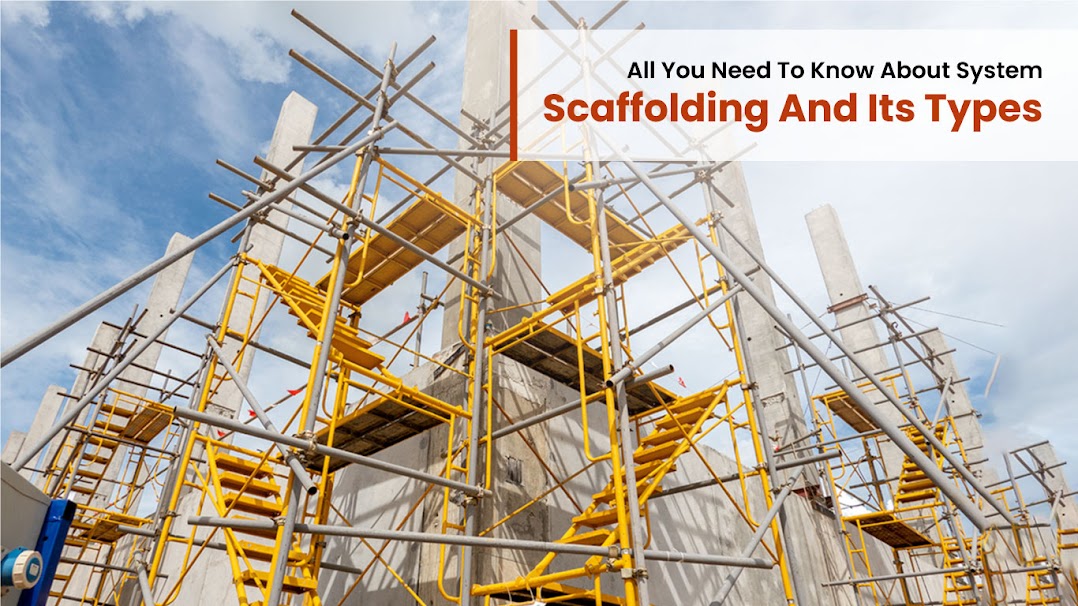
  7. Types of Scaffolding

    Comments Off on Types of Scaffolding


    In the construction world, scaffolding is a big deal, but not all scaffolding is the same. Here, we’ll focus on system scaffolding, breaking down the different types you might come across. Whether you’re a seasoned pro in the building game or just curious about how big structures get made, this post is for you.

    Tube & Coupler Scaffolding, Frame Scaffolding, System Scaffolding (such as Cuplock and Ringlock), Cantilever Scaffolding, Suspended Scaffolding, and Trestle Scaffolding are the primary scaffolding types utilized in construction. Based on material efficiency, safety, height, and structure design, each variety meets particular construction needs.

    We’ll guide you through the various types of scaffolding, showing how each one fits into the construction puzzle. It’s all about making your work easier and safer. So, if you’ve ever wondered about the scaffolding that dots our cityscapes, you’re in the right place. Let’s get started on this journey through the world of scaffolding.

    The choice of scaffolding part depends on reasons like load capacity, ground conditions, climatic conditions, etc. But have you come across the terms “modular or system scaffolding“? It is the most advanced scaffolding system that can be employed at any construction site and displays a high degree of versatility.

    This article will briefly describe the different types of scaffolding system

    What is System Scaffolding?

    Also known as modular scaffolding, is a type of scaffold system that comprises prefabricated individual components. It is based on the wedge coupling method that allows the interlocking of scaffolding components without the need for nuts and bolts. The junction points enable quick and easy connection of load-bearing items with greater rigidity. This system is highly efficient because of its enormous flexibility. 

    Types of Scaffolding System

    1. Ringlock Scaffolding

    Ring lock scaffolding It is the most sophisticated type of system scaffolding where angular flexibility is imperative. It requires minimum space for storage and is used to support and access structures in the construction industry, offshore construction, industrial maintenance, and shipbuilding.

    Components: 

    1. Vertical posts: Standards that aim to give vertical support.
    2. Ledger: Horizontal support and can also be used as guard rails.
    3. Braces: Provide lateral support and obtuse angle guard rail.
    4. Truss ledger: Increases the strength of scaffold for maximum weight-bearing capacity
    5. Base: Adjustable screw jack can be used as a base.
    6. Rosette clamp: Used at any point on the vertical tube that allows tube attachment at various angles.

     2. Cuplock Scaffolding System

    cuplock system It comes with a unique locking mechanism that allows fast erection. It consists of pre-engineered horizontal and vertical components that combine to provide the most stable structure. This system is known for its simplicity, lightweight, high-load capacity, and ability to accommodate more intricate structures.

    Components:

    1. Standards: Vertical tubes that have rotating cups on the top and fixture for the same at the lower end.
    2. Ledgers: Horizontals that have forged blade ends.
    3. Universal jack: Can be placed at the bottom or top of the scaffold to allow adjustments.
    4. Transoms: Provides intermediate support with jaw-shaped ends.
    5. Hop-up brackets: Supports two to three boards beyond the interior of the scaffold and increases the span of the working platform.

    3. Kwikstage Scaffolding

    This is a versatile type of system scaffolding that can be molded into any shape. It is widely used in situations where the facade of the building is complex. The individual components are easier to track, stack, transport, and join.

    Components: 

    1. Standards: Are the uprights that support the weight of the entire scaffolding by resting on the base jack.
    2. Ledgers: Horizontal tubes used to connect the standards.
    3. Base jack: It serves as the foundation of the entire framework that has multiple height adjustments.
    4. Boards: With an anti-slip surface, these are attached to ledgers to create the working platform.
    5. Diagonal brace: Serve as a support for the scaffold tower to enhance stability
    6. Trap door: The hook-on boards that have trap doors for easy access to platforms.

    4. Frame Scaffolding

    It is the most common system of scaffolding that is manufactured from round tubing and is available in several configurations. It has in-built sections of both a ladder and a walk-thru portal. Usually, to build a framework, two sections of frame scaffold are connected using diagonal braces/poles and arranged in a square configuration. 

    Components:

    1. Frames: Gives lateral support to the 3D framework with in-built stair access.
    2. Braces: It provides a rigid connection and holds scaffold members in a fixed position. 
    3. Castor wheels: Used as a rolling base that allows dislocation of scaffold framework from one place to another.
    4. Planks: Used as a platform that provides a working platform for the work crew and has an anti-slip surface.

    5. Shoring Props

    These are the scaffold components used to support a building, vessel, structure, or trench with shores when on the verge of collapsing or undergoing repairs. It is usually applied to a slab framework. It consists of an inner tube, an outer tube, and a plate on the end. Shoring is done when-

    1. The walls of building pr structures bulge out
    2. Crack in the walls due to unequal settlement
    3. For adjustments
    4. The wall is to be enlarged

    Shoring props provide advantages such as simplicity of assembly and disassembly, safety, efficiency, and great load-carrying capability. It also comes with no loose parts, so there’s no need to worry about losing anything.

    5. Haki Scaffolding

    Haki scaffolding is a type of scaffolding often used in construction and maintenance jobs. It’s popular because it’s easy to put together and can fit different kinds of buildings. Haki scaffolding is made up of basic parts like vertical poles, horizontal bars, diagonal supports, and extras to customize it for different jobs. It’s tough, stable, and safe, which is why many builders like using it.

    What Are the Uses of Modular Scaffold?

    Modular scaffolds are flexible structures used in construction, maintenance, and events. They help people reach high places safely for tasks like building, fixing, and setting up. They’re important in construction, entertainment, and industry because they make it easier and safer to work at different heights for various projects.

    Advantages of Modular Scaffolding

    Compared to traditional scaffolding, modular scaffolding offers several advantages that can benefit both construction companies and workers:

    • Efficiency and Speed: Building and taking apart things is faster because the parts fit together easily. This saves time and money on projects.
    • Versatility and Adaptability: Modular scaffolding can be changed to fit different shapes and sizes of buildings. So, it’s good for buildings that are a bit unusual. You can also adjust it to work at different heights and angles.
    • Safety: It’s safer to work on because the parts fit securely together. This helps reduce accidents and keeps workers safe.
    • Cost-Effectiveness: Even though it might cost more at the start, it’s cheaper in the long run. You can use it again and again for different projects, which saves money. Plus, putting it up and taking it down is quick, so you save on labor costs too.
    • Additional Benefits: Modular scaffolding is light and easy to move around. It doesn’t take up much space on the worksite. And, some types are made from materials that are good for the environment.

    Scaffold distributors in USA play a crucial role in ensuring that construction projects have safe and reliable access solutions, helping workers perform their tasks efficiently and securely.

    Disadvantages to Modular Scaffolding

    While modular scaffolding offers advantages like speed and safety, it does come with some drawbacks:

    • Higher Initial Cost: Modular scaffolding costs more at the beginning compared to regular scaffolding.
    • Less Flexibility: Modular scaffolding is made for certain shapes. It might not work well for weirdly shaped buildings or might need more planning to fit right.
    • Design Complexity: Making a safe and good scaffold layout with modular parts can be harder for unique projects compared to regular scaffolding, which can adjust more easily.

    What Are the Uses of Tubular Scaffold?

    Tubular scaffolding is a really useful kind of scaffolding often seen on construction sites. It’s built from metal tubes, like steel or aluminum, joined together with clamps and fittings. This makes it easy to adjust and set up for different jobs.

    Here are some of the most common uses of tubular scaffolding:

    • Helping Workers Reach High Places Safely: Tubular scaffolding makes safe platforms so workers can reach high parts of buildings. They use it for jobs like painting and fixing walls.
    • Holding Up Heavy Things: Tubular scaffolding is strong and tough. It holds up heavy stuff like bricks and roofing materials.
    • Making Temporary Roofs: Tubular scaffolding can build roofs temporarily over construction sites. It protects workers and materials from rain and sun.
    • Supporting Concrete Molds: Tubular scaffolding helps hold up molds while concrete dries. They use it for making walls, beams, and floors.
    • Setting Up Event Stages: Tubular scaffolding can be used to make stages for events like concerts and sports games.

    Advantages of Tubular Scaffolding

    • Adaptability: Tubular scaffolding, also called tube and clamp scaffolding, is really versatile. It can be adjusted to fit almost any shape of building or structure because it uses tubes and clamps to connect. This makes it great for complex projects or surfaces that aren’t even.
    • Affordability: Tubular scaffolding can be cheaper to start with compared to other types, especially if you plan carefully to avoid wasting materials. Also, the parts are basic and can be fixed or swapped out individually, so they last longer.
    • Easy Setup and Removal: Putting together and taking apart tubular scaffolding is pretty simple because of the easy clamp connections. Experienced workers can do it quickly.

    Disadvantages to Tubular Scaffolding?

    • Lost Parts: Clamps and other small components can be easily misplaced, especially on large jobs. Missing parts can slow down assembly and require replacements, impacting both schedule and cost.
    • Lower Load Capacity: The connection points of tubular scaffolding rely on friction to hold, which can limit the overall weight capacity compared to some interlocking systems. This may not be suitable for projects requiring very heavy loads.

    Comparing Tubular Scaffolding to Modular Scaffolding 

    Feature Tubular Scaffolding Modular Scaffolding
    Components Individual tubes and clamps Prefabricated frames, braces, and platforms
    Assembly Requires loose fitting and tightening clamps Uses locking mechanisms for quick connection at designated points
    Flexibility Highly adaptable to any shape or size Limited to pre-defined configurations
    Speed of Assembly Time-consuming and labor-intensive Faster and easier to assemble
    Cost Potentially lower material cost Generally higher initial cost
    Skill Level for Assembly Requires skilled workers for safe construction Can be assembled with less specialized training
    Suitability Ideal for complex shapes and uneven surfaces Best for regular shaped buildings and repetitive tasks
    Safety Relies heavily on proper assembly and inspection Standardized components can enhance safety

    Following OSHA scaffolding guidelines helps prevent accidents like falls or collapses, keeping workers safe while they do their jobs. Always make sure to adhere to these rules to maintain a secure work environment.

    Where Can You Find the Best Modular and Tubular Scaffold?

    It doesn’t have to be hard to find the best modular and tubular scaffold for your building or remodelling job. The important thing is to find providers who put safety, quality, and flexibility first. The best companies offer a variety of scaffolding choices to fit projects of all sizes and levels of difficulty. Having the right scaffold system is important whether you’re working on a high-rise building, a house or a structure for an event.

    Companies with good names, track records, and a dedication to customer service are the ones you should look for. You should also think about those that offer full help, from planning and design to installation and takedown. By picking a supplier that meets these standards, you can be sure that the job will go well and that everyone involved will be safe.

    At AAIT Scaffolding, a scaffold distributors in the usa, you can get really good scaffolding. We have different types of scaffolding such as modular, tubular, cuplock, ringlock, and shoring. Our stuff is top-notch!

    Wrapping Up

    Scaffolding is an integral part of construction work. The choice of scaffold depends on site conditions and your requirements. We hope that this blog has elaborated on types of scaffolding.

    AAIT is a leading scaffolding distributor in the USA and possesses an array of scaffolding accessories. Our scaffold parts are made from high-strength structural steel alloy and come with galvanized plating. The in-house decks and all other accessories comply with OSHA regulations. We regulate scaffolding types and safety features such that they pose no harm to scaffolders and also give you the best ROI.

    If you are looking for best-in-class system scaffolding and accessories, book a free quote today!

  8. Scaffolding Clamps – Types and Advantages

    Comments Off on Scaffolding Clamps – Types and Advantages

    Scaffolding Clamps - Types and Advantages

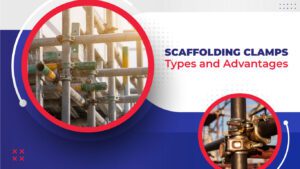
    Scaffolding systems usually consist of horizontals, verticals, and connectors. These connectors are known as clamps, and they are used to secure the horizontal and vertical components in place. All the components are to be made with premium materials as they are used by employees to access higher heights and lift heavy weights. 

    The Scaffolding clamps plays a crucial role in maintaining a sturdy scaffold structure. They can be used to create an angle or a straight line and should be tightly secured to make the scaffold usable. There are various types of clamps available, and the overall scaffold structure is likely to use various clamps at every connecting point. 

    In this text, we shall walk through the types and advantages with regard to scaffold tube clamps.

    What are scaffolding clamps?

    Scaffolding clamps and fittings are basic components for erecting a framework. They are used to connect the frames in a straight line or at an angle and ensure that the other components are safely held for structural stability. Clamps are meant to increase the productivity and safety of the framework. They have a simple construction mechanism, i.e., they can be fastened using nuts and bolts, which makes the build-up process easier. 

    Types of Scaffolding Clamps

    There are three types of scaffolding clamps based on fundamental mechanical differences.

         1. Tube and coupler scaffolding

    The platform of a tube and coupler scaffold is supported by tubing, while the uprights, bracing, bearers, and runners are connected by coupling mechanisms. 

    Due to their robustness, they are frequently used where huge loads need to be transported or where multiple platforms need to reach high heights. 

    These scaffolds may be put together in a variety of ways, making them the best choice for working surfaces with unusual shapes or sizes.

         2. H-frame / Facade scaffolding

    This framework consists of vertical, horizontal, and diagonal parts along with couplers and other auxiliary scaffolding parts. Its design is similar to the ladder that can be used to access heights. 

    It is largely used for painting, plastering, exterior covering, and similar tasks. As its name suggests, it is perfected for facade work. 

    The accessories are easy to assemble and disassemble with the use of clamps. H-frame is a safe and reliable form of scaffolding. 

    When the individual components are of premium quality, they become resistant to bulking.

    This is possible by establishing rigidity with the connections, i.e., by fixing couplers firmly. 

         3. Multi-directional scaffolding

    This framework includes clamps that are made up of eight drill steel rods that further enhance stability and strength. 

    These clamps are at the extremity of the system’s components and fit exactly round, which yields solid joints with high-load bearing capacity. 

    Even the most complicated and demanding scaffold structures, like those used in heavy-duty industrial and civil engineering applications, can be accommodated by them. 

    Importance of Scaffolding Clamps

    Clamps are used to fix the joints and bring all the components together. Hence, we can consider clamps the most important tool at every construction site. A high-quality aluminum tube clamp, steel clamp, and other clamps ensure the maximum safety of employees. Below are the important features of clamps.

         1. Ensures Safety

    The safety of the company’s personnel is of utmost importance. Scaffolding clamps have improved worker safety and established a safe working environment. The high-quality scaffold clamps provide security and risk-free operations.

         2. Enhance accessibility

    At the construction site, where accessibility is difficult due to narrow spaces, scaffold tube clamps provide that accessibility. The issue can be resolved by installing any form of scaffolding clamps, which allows the staff to carry tools to heights with safety.

         3. Quick assembly

    Clamps are easy to handle and assemble at construction sites. They can be fixed with simple nuts and bolts, or simply by hammering tubes into them. This makes work easier and faster. 

       4. Increased efficiency

    Due to the easy mechanism of clamps, employees can create an entire structure in less time. This increases the efficiency of workers, and saves their time and energy without compromising their safety.

         5. Strategic position

    The greatest benefit for scaffold clamps’ personnel is the strategic positioning that is given to them. Standing side by side, they may place their scaffolding at any angle while providing a stable working surface.

    Final Words

    Scaffolding clamps are versatile and of greater use in all scaffolding systems. They enhance safety, productivity, ease, and accessibility. The type of clamp to be used will depend on your intended work and the location of the site. The type of tubes and clamps to be used will depend on your intended work and the location of the site.

    AAIT is a scaffold tube clamp supplier in the USA. Our clamps are made from high-quality structural steel and aluminum. This will ensure the safety and stability of the scaffolding system. Our range of clamps includes I-beam tube clamps, right-angle couplers, swivel couplers, rosette clamps, and much more.

    To get in touch with us, visit our website at aaitscaffold.com and get your free quotation today!

  9. Benefits of Ringlock Scaffolding System

    Comments Off on Benefits of Ringlock Scaffolding System

    Advantages of Ringlock Scaffolding System

    Scaffoldings are used to provide a safe working platform and access that is suitable for a work crew to carry out their work. The scaffold systems are made of materials that are substantially independent. These individual components are highly durable and reliable, which together ensure high safety and accessibility. 

    Download Ringlock Product Manual

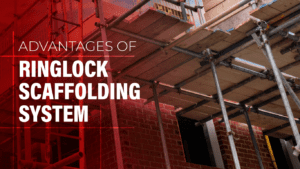
    Amongst many types of scaffolding systems, ringlock scaffolding is the most sophisticated and complete scaffolding system in the market. It is designed to have minimal components, with an easy setup procedure and total safety. 

    It has a built-in safety mechanism and a high load-bearing capacity. With easy assembling and disassembling procedures, ringlock system scaffolding has been a popular choice today. 

    In this article, we shall review why ringlock scaffolding is a popular choice. 

    What is a ringlock scaffolding system?

    The Ringlock system enhances the performance of construction projects. It is ideal for structures with complex elevations and shapes. It has very strong angular flexibility, and its design requires minimal storage space. Its versatility broadens its sites of usage, i.e., in the construction industry, offshore construction, industrial maintenance, and shipbuilding.

    It is a modern scaffolding system that aids construction work. The heart of this system is a single rosette that allows three braces and three horizontals to be attached. This allows the ringlock system to attain circular, curved, or straight structures, which can be used for mobile and independent towers. 

    Components of the Ringlock Scaffolding System

    Ringlock scaffolding parts Description
    Vertical post/Standards They aim to give vertical support and come in different dimensions to adapt to any structure.
    Horizontal ledgers They aim to provide horizontal support for platforms and loads. They can also be used as guardrails.
    Ringlock braces To provide lateral support to the scaffold. They can be used as guardrails, tension, or compression members.
    Truss Ledgers To increase the strength of the scaffold and enable additional load-bearing capacity.
    Base Jacks To provide a starting point for a ringlock system. It enables height adjustments when working on an uneven surface.
    Board Brackets To connect two or more scaffolding parts. It is also used at the edge of scaffolding to extend the reach of the extension on any side of the scaffold.  
    Planks This aids the working platform for the work crew. 
    Rosette clamp To aid connections of multiple ledgers or diagonal braces. It allows up to six connection points.
    Spigot adaptor clamp It allows the connection of standards at intermediate locations.

    BI-Ringlock-Scaffolding2-20082022

    Advantages of using Ringlock System

    1. A high degree of flexibility and versatility

    With advanced technology, this system comes with 6 connections at each node. It enables the setting up of ledgers and braces at several angles via a single connection point. With this, it is possible to build intricate structures using the same ringlock scaffolding parts.

    1. Reduced errors

    It is easy to assemble and disassemble. Its simple design, components, and prefabricated connection points help eliminate errors. The erection involves the attachment of ledgers and diagonals to the rosette connector with just a few hammer strokes. This also saves time on maintenance tasks like cleaning the material. 

    1. Greater stability

    This system comes with the best frame body, which enhances its stability. It includes support of complete vertical rod, horizontal-diagonal, and vertical-diagonal structures in the 3D space. This provides a lattice system that is strong, feasible, and durable. 

    1. Easy Storage

    Ringlock scaffolding parts are light in weight and have less consumption. The maximum distance they can reach is 3 meters, and the step distance can reach up to 2 meters. Thus, the consumption in the same support area reduces. Thus, they are also easy to transport and store.

    1. High load-bearing capacity

    The scaffolding parts come in a hot-dipped galvanized finish, which makes them durable and resistant to rust. 

    This improves their service life and ensures product safety. The structure of ringlock scaffolding can bear maximum loads like concrete materials, scaffolding tools, etc. Due to their extensive load-bearing capabilities, they can be used as a shoring solution. 

    1. Easy assembly and pocket friendly

    The simple design of this system enables quick and easy assembly. It also increases efficiency by more than three times. As the build and finishing quality of all the components of the system is the finest, they become pocket friendly. The comprehensive cost of set-up, labor cost, transportation, material loss, maintenance cost, re-purchase cost, etc. are reduced. Thus, the ringlock system becomes pocket friendly. 

    With its wide array of advantages, the ringlock system becomes a popular choice. 

    Final words

    The Ringlock System proves to be reliable, safe, and efficient. It can be constructed with different shapes, sizes, and load-bearing capacities. Also, It is widely used in all types of construction projects due to its enhanced assembling and disassembling procedures.

    AAIT Scaffold is a best-in-class ringlock scaffolding distributor in the USA. The components of ringlock scaffolding for sale are built with high-strength low alloy structural steel material and come in a hot-dipped galvanized finish. With the wide range of ringlock scaffold specifications and available dimensions, we ensure a quality product with greater safety.

  10. How to Choose a Scaffold System Online (USA Buying Guide)

    Comments Off on How to Choose a Scaffold System Online (USA Buying Guide)

    How to Choose a Scaffold System Online

    Buying a scaffold system online might save you time and money, but if you choose the wrong one, you could put yourself in danger, break the law, or have to pay extra. Scaffold systems in the US have to follow tight OSHA rules, be able to hold big loads, and keep people from falling.

    This tutorial tells contractors, project managers, and procurement officers how to find the best scaffold system online while making sure it is safe, meets all requirements, and works well for a long time.

    Why Choosing the Right Scaffold System Matters

    Scaffolding is more than just a temporary way to get to a job site; it is a structural structure that must properly hold workers, tools, and supplies at height.

    Choosing the wrong scaffolding can lead to:

    • Breaking OSHA rules
    • Delays in the project
    • Unstable structure
    • Injuries to workers
    • Liability in the law

    Before you buy something online, you need to know about the many types of scaffolds, how much weight they can hold, and the rules they have to follow.

    8 Tips for Buying a Scaffold System Online

    1. Understand the Different Types of Scaffold Systems

    Find out which scaffold system is best for your project before you buy it.

    Frame Scaffolding

    • Common for work in homes and small businesses
    • Simple to put together
    • Affordable


    Ringlock Scaffolding

    • Heavy-duty and modular
    • Strong locking system that works in all directions
    • Great for big commercial and industrial projects


    Pick the system based on how hard the project is, how high it needs to be, and how much weight it needs to hold.

    2. Check OSHA and ANSI Compliance

    OSHA 29 CFR 1926 Subpart L sets rules for scaffolding safety in the U.S.

    Before you buy something online, make sure:

    • The system can handle four times the load it was meant to.
    • Guardrails work with and follow the rules.
    • Parts fulfil ANSI and OSHA standards.
    • The manufacturer gives load documentation


    If you buy scaffolding that doesn’t meet the rules, you could fail an inspection and get fined.

    3. Review Load Ratings Carefully

    There is a maximum load rating for every scaffold system.

    Think about:

    • How many people work on the platform
    • Weight of things
    • Tools and gear
    • Wind exposure

    For tough jobs, you need stronger systems like ringlock scaffolding with built-in locks.

    Always check load charts; never presume.

    4. Evaluate Platform and Plank Quality

    Platforms need to be solid, not slippery, and able to hold weight.

    Aluminium scaffold planks are useful for businesses and industries since they:

    • Consistent performance under load
    • Long life
    • Resistance to rust
    • Less warping than wood


    5. Check Guardrails and Fall Protection Options

    In the U.S., falls are the most common cause of scaffold-related injuries.

    Make sure your system can handle:

    • Top and middle guardrails
    • Toe boards
    • Secure points of attachment

    Fall protection compatibility is a must.

    6. Verify Safe Access Components

    OSHA says that safe access is necessary.

    Look for:

    • Scaffold stairs
    • Brackets for ladders
    • Gates for access

    7. Research the Supplier’s Credibility

    It’s really important to check out the supplier when you buy something online.

    Look for:

    • Contact information that is easy to understand
    • Details about the product
    • Documents for load testing
    • Information about the warranty
    • Reviews from customers

    A good supplier should give you technical help and documentation.

    8. Compare Total Cost — Not Just Price

    The best choice isn’t necessarily the cheapest.

    Think about:

    • Sturdiness
    • Quality of galvanisation
    • Availability of replacement parts
    • Performance over time
    • Following safety rules

    A good scaffold system cuts down on expenditures for replacing it and for liability in the future.

    Common Mistakes to Avoid When Buying Scaffolding Online

    • Not following OSHA rules
    • Picking the wrong type of scaffold
    • Not checking the load capacity
    • Buying parts that don’t work together
    • Not using guardrails and access tools
    • Only thinking about price

    Avoiding these blunders keeps projects on time and safe.

    Quick Scaffold Buying Checklist (USA Contractors)

    Before you click “Buy Now,” make sure:

    • The right kind of scaffold (frame or ringlock)
    • System that follows OSHA rules
    • Checked the load rating
    • Included are guardrails.
    • Included is the access system
    • Confirmed the quality of the plank
    • Documents from the supplier are available
    • Review of the warranty and return policy

    Frequently Asked Questions

    What is the best scaffold system for commercial construction?

    People commonly use ringlock scaffolding for commercial and industrial projects because it is strong and can be put together in different ways.

    What OSHA standard applies to scaffolding?

    Under 29 CFR 1926, OSHA controls scaffolding. Part L.

    Can I buy scaffolding online safely?

    Yes, but only if you check the load ratings, compliance paperwork, and the supplier’s reputation.

    Should I rent or buy scaffolding?

    Buying is a good idea for projects that happen more than once, projects that will be used for a long time, and big building jobs.

    What is the difference between frame and ringlock scaffolding?

    Frame scaffolding is easier to use and is often used for home projects. Ringlock scaffolding is modular, stronger, and better for complicated industrial tasks.

    Final Thoughts

    When you buy a scaffold system online in the US, you need to do more than just compare pricing. You need to check for compliance, load capacity, fall prevention, access systems, and supplier reliability.

    Choosing the correct scaffold system keeps workers safe, makes sure the project follows OSHA rules, and helps it run smoothly for a long time.

    Invest prudently, and always put safety and the strength of the structure first.