Posted by iDigitalise on | Comments Off on Cuplock Scaffolding – Types, Uses, Benefits, and Safety
Cuplock scaffolding has earned its place as one of the most trusted modular systems on modern construction sites. Teams like it because it locks quickly, handles heavy loads without trouble, and doesn’t take forever to assemble. Over time, it has become a go-to solution for contractors, industrial maintenance crews and builders working on everything from towers to bridges to large infrastructure work. It feels solid on site and adapts well to demanding environments.
What Is Cuplock Scaffolding?
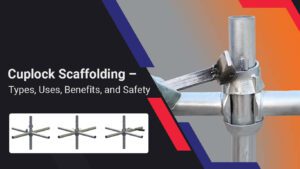
Cuplock is a modular system that links standards and ledgers through a simple cup-and-node lock instead of juggling loose bolts. Most of the time, one solid tap with a hammer is enough to tighten everything in place. It saves a lot of time during setup and makes taking it down much quicker than the older tube-and-clamp method. Because the entire system is made from hot-dip galvanized steel, it holds up well even in rough outdoor conditions and long, repetitive projects.
Key Features of the Cuplock System
The system comes with a few core strengths that make everyday work easier. It locks quickly without tools. It can manage heavy loads comfortably. The modular layout keeps things steady even as the structure goes higher, which makes it easier to trust while you’re building. Most parts are galvanized, so they last through multiple cycles. It also works well across various sites, which cuts the time spent on setup and adjustments. Overall, these features make Cuplock a reliable fit for tough construction environments. To understand how Cuplock scaffolding compares with other modular scaffolding systems, read our detailed guide on types of modular scaffolding systems used in modern construction projects.
Main Components of Cuplock Scaffolding
Cuplock works through a set of parts that fit together smoothly, so the whole system behaves in a clear, predictable way.
Standards (Verticals)
These vertical tubes come with cup joints spaced out along their length. They’re basically the backbone of the setup and take on most of the weight.
Ledgers (Horizontals)
These connect to the standards with their forged blade ends. Once they settle into the cups, the structure becomes stable.
Transoms
These are the horizontal pieces that keep the boards or platforms steady. They usually sit quietly in the background, but they still manage to handle a good deal of the weight.
Base Jacks & U-Jacks
It allows easy adjustment of height and spreading of loads appropriately to keep formwork balanced, with the base secured.
Braces
These keep the structure from swaying and give side support, making the whole setup feel steadier.
Together, these parts create a modular base that can be shaped for simple jobs or more complicated builds.
Types of Cuplock Scaffolding Systems
Cuplock Access Scaffolding Used for façade work, painting, repairs and general maintenance.
Cuplock Shuttering & Formwork Support Its high load capacity makes it suitable for slabs, beams and bridge work.
Cuplock Staircase Towers These offer a safe way for workers to move between different levels on the site without any hassle.
Cuplock Mobile Towers Portable towers with wheels that give quick access for maintenance work, especially when you’re indoors and need to move often.
Each type can be adjusted depending on the needs of the project, which adds flexibility and saves time.
Where Cuplock Is Commonly Used (Practical Applications)
You’ll find Cuplock across a wide range of industries. It supports high-rise construction. It helps with commercial and residential façade work. Infrastructure projects like flyovers and metros also rely on it. Oil and gas sites use it for maintenance. It shows up in shipyards, factories and even temporary event platforms. It also works well for heavy slab support and formwork.
A quick example
A recent 12-storey residential project reduced its overall scaffolding time by roughly 40 percent simply because the site switched to Cuplock.
Benefits of Cuplock Scaffolding
Faster Assembly & Dismantling The cup-lock joint cuts down on setup time and helps keep labour costs in check.
High Strength & Stability It can take on heavy loads without trouble, which is why it works so well for shoring and slab support.
Reduced Inventory Requirements You donot need lots of parts to keep the system running which makes storing and moving everything around becomes a lot easier.
Long Service Life The galvanized finish protects the parts and enables them to last through many years of use in normal conditions.
Cost-Effective for Repetitive Projects The modular layout becomes more cost-friendly when you are using it time and again for similar kinds of projects.
Limitations of Cuplock Scaffolding (Important to Know)
No system is perfect. Cuplock sometimes feels less flexible in very tight or uneven spaces. It still needs trained workers who understand proper locking and alignment. The initial cost is slightly higher than basic tube-and-clamp systems. A few custom shapes might require extra fittings. Knowing these points helps teams plan better and avoid surprises on site.
Safety Standards & Best Practices
Safety is something that is to be maintained through each phase of the scaffolding process. It is must that only trained workers should be the ones setting it up and checking it, since that keeps the whole structure safer.
Follow Industry Standards
Make sure the system meets standards like EN 12810, EN 12811, OSHA and any local rules that apply in your area.
Pre-Use Inspection Checklist
Look over the cups and blades for any bending or unusual wear. It is important to keep an eye out for cracks or rust. Apart from that also make sure the base jacks are stable and level, and check that every cup is properly locked.
During-Use Recommendations
Use proper ladders, rails and toe boards. Avoid overloading the platforms. Inspect the structure regularly while the project is active.
Dismantling Safety
When it’s time to take the structure down, do it in a planned sequence, starting from the top and working your way down slowly and safely.
Cuplock vs Other Scaffolding Systems
A simple comparison:
Feature
Cuplock
Ringlock
Tube & Clamp
Assembly Speed
Very Fast
Fast
Slow
Flexibility
Moderate
High
Very High
Load Capacity
High
High
Medium
Cost
Moderate
High
Low
Ideal Use
Repetitive & heavy-duty support
Complex structures
Irregular shapes
This helps teams understand when Cuplock is the best fit.
Buying vs Renting Cuplock Scaffolding
Rent Cuplock If: The project is short, your budget is not much or requirements keep on changing.
Buy Cuplock If: You work on repetitive tasks, want full control of inventory or plan long-term cost savings. For frequent users, owning the system usually pays off.
How to Choose a Reliable Cuplock Supplier
Look for parts that are properly hot-dip galvanized, since that’s what keeps them from wearing out too fast.
Check if their weld quality is steady and not hit-or-miss. Good welds usually say a lot about the overall build.
Ask for load-testing certificates. It’s a simple way to confirm the parts can actually handle the weight they claim.
Make sure they offer compatible cuplock accessories so you don’t end up mixing pieces from different systems.
See if they maintain enough stock, because waiting weeks for basic components can delay the whole project.
Pick a supplier who delivers on time and responds when you need help. It makes day-to-day work smoother and cuts down on unnecessary stress.
Frequently Asked Questions (FAQ)
Q: Is Cuplock scaffolding safe? Yes, as long as trained workers assemble it properly and conduct regular checks.
Q: What makes Cuplock different? Its fast locking system, sturdy build and reusable modular design make it easier to work with.
Q: How long does Cuplock last? With care and galvanization, it can last through years of heavy use.
Q: Can Cuplock handle heavy loads? Yes, it is built for strong load capacity, including shoring and slab support.
Q: Is Cuplock cheaper than Ringlock? Cuplock often becomes more cost-efficient for repetitive tasks and heavy-duty support.
Conclusion
Cuplock scaffolding gives strength, speed and long-term durability. Its modular scaffolding parts and simple locking system help teams in saving time without compromising safety. Because it performs well across construction, industrial and infrastructure projects, it has become one of the most trusted systems worldwide. Whether the task involves façades, slab support or plant maintenance, Cuplock continues to deliver consistent performance for contractors everywhere.
Posted by aaitinternational on | Comments Off on Scaffolding Safety & Secure Structural Development
Scaffold assembly and dismantling are critical processes in construction and scaffolding industrial projects. Traditionally, these tasks have been labor-intensive and time-consuming, leading to delays and increased costs. However, with the advancements in scaffolding systems and techniques, it is now possible to streamline these processes and save both time and labor.
In this blog post, we will explore various strategies and tips to optimize scaffold assembly and dismantling for saving time and labor on construction sites.
1. Plan and Prepare Efficiently
Before starting any scaffolding project, thorough planning and preparation are crucial. By investing time in meticulous planning, you can significantly reduce the overall assembly and dismantling duration. Here are a few key aspects to consider:
Site Assessment: Begin by assessing the site conditions, including terrain, access points, and potential obstacles. This evaluation will help you determine the most suitable scaffold design and configuration.
Equipment and Material Management: Ensure that all the required scaffolding accessories, equipment and materials are readily available before initiating the assembly process. This includes scaffolding components, tools, safety gear, and any specialized equipment.
Task Sequencing: Plan the assembly and dismantling sequence in advance. Identify the critical path and prioritize the tasks accordingly to minimize downtime and optimize labor efficiency.
2. Utilize Modular Scaffolding Systems
One of the most effective ways to save time and labor during scaffold assembly and dismantling is by utilizing modular scaffolding systems. These systems consist of pre-fabricated components that can be easily interconnected, offering flexibility and ease of installation. Innovative modular scaffolding solutions significantly enhance efficiency. Here’s how they can help:
Quick Assembly: Modular systems, such as the Ringlock system, feature intuitive designs that allow for rapid assembly. The components are designed to fit together seamlessly, reducing the need for extensive manual labor and specialized skills.
Easy Adjustability: Modular scaffolding systems offer adjustable height and width, allowing for easy adaptation to different scaffolding construction requirements. This flexibility eliminates the need for cutting or modifying components, saving time and effort.
Safe and Sturdy: Modular systems undergo rigorous testing to ensure safety and stability. The sturdy design and reliable connections minimize the risk of accidents, providing a secure working environment for the labor force.
3.Employ Efficient Work Practices
Apart from utilizing advanced scaffolding systems, implementing efficient work practices can further optimize time and labor during scaffolding construction. Consider the following strategies:
Team Coordination: Ensure effective communication and coordination between team members. Assign specific roles and responsibilities to each worker, streamlining the workflow and avoiding delays caused by confusion.
Task Specialization: Encourage task specialization to enhance productivity. By assigning workers to specific tasks they excel in, you can capitalize on their expertise and achieve faster results.
Training and Certification: Invest in comprehensive training programs for scaffold assembly and dismantling. Certified workers will be well-versed in the best practices, enabling them to work efficiently while adhering to safety regulations.
4.Implement Time-Saving Techniques
To further expedite scaffolding accessories assembly and dismantling, consider implementing the following time-saving techniques:
Pre-Assembly: Pre-assemble scaffold components wherever possible, especially for repetitive tasks. This approach allows for quicker installation on-site and reduces labor hours.
Use of Mechanical Aids: Whenever feasible, employ mechanical aids like hoists, pulleys, and material handling equipment. These tools can significantly reduce the physical effort required for lifting heavy components, minimizing labor fatigue and enhancing overall productivity.
Parallel Processing: Look for opportunities to parallel process different stages of scaffold assembly and dismantling. For example, while one team is assembling scaffolding on one side of the structure, another team can simultaneously dismantle the scaffolding from a different area.
Save Time And Labor With AAIT Technocraft
Efficient scaffold assembly and dismantling are crucial for successful construction projects. By implementing the strategies outlined above and leveraging advanced modular scaffolding systems like those offered by AAIT Technocraft, you can save significant time and labor during these processes. Remember to prioritize planning, utilize innovative systems, employ efficient work practices, and implement time-saving techniques.
By doing so, you will not only enhance productivity but also improve safety on the job site. Embrace these advancements and transform your scaffold assembly and dismantling practices for the better with the leading scaffolding parts manufacturer in the USA AAIT Technocraft’s scaffolding equipment and accessories.
Posted by aaitinternational on | Comments Off on Sun-Proof Scaffolding: Tips and Techniques for Hot Weather
Working on a scaffolding construction system under the scorching sun and in warm temperatures can give rise to a range of challenges, encompassing not only health hazards but also the inconvenience of blinding glares and reflections bouncing off surfaces and equipment. To ensure the well-being of workers, it is imperative to implement certain measures.
We will discuss the scaffolding hazard, and safety measures that must be followed at the construction site.
Hazardous Summer Heat Effects
It is worth noting that the Occupational Safety and Health Administration (OSHA) has defined specific heat index thresholds that are deemed hazardous, warranting extra caution. Familiarizing oneself with these guidelines can be immensely beneficial in maintaining scaffolding safety and well-being of the workers.
OSHA has established specific temperature ranges that are considered hazardous in terms of heat index, and they strongly advise taking precautions accordingly:
Moderate risk: Temperature range between 91 and 103 degrees. It is crucial to exercise caution and remain vigilant.
High risk: Temperature range between 103 and 115 degrees. Extra precautions should be taken to ensure scaffolding safety.
Extreme risk: Temperature exceeding 115 degrees. Aggressive protective measures are necessary to mitigate the dangers.
Typically, the hottest part of the day falls between 3 p.m. and 4:30 p.m. OSHA emphasizes that working directly under sunlight, engaging in strenuous activities, or wearing heavy personal protective equipment can elevate the heat index by 15 degrees. Consequently, scorching temperatures pose a significant hazard during the summer season, leading to various heat-related illnesses such as heatstroke, rash, cramps, dehydration, heat exhaustion, and sunburn. Furthermore, research has shown that high temperatures often result in reduced productivity among workers, leading to an increase in errors and accidents. By incorporating these preventive measures and adhering to OSHA’s recommendations, employers can create a safe work environment.
The Centers for Disease Control and Prevention (CDC) outlines several signs indicating heat-related illnesses, which include:
Headache
Dizziness
Nausea
Muscle cramps
Skin irritation or pain
Rapid or weak pulse
Muscle pains or spasms
Formation of standalone or clustered blisters
Clammy or hot skin
Elevated body temperature
Loss of consciousness
If you or a worker experience any of the aforementioned symptoms while working on scaffolding, it is imperative to immediately cease work and find a cool place to rest. If necessary, contact medical personnel for assistance.
Measures To Safeguard
As the temperature rises and workers gradually return to on-site operations, it becomes crucial for us to acknowledge these emerging risks and implement necessary measures to safeguard our staff.
1 – Protecting Yourself from Sunburn and Heatstroke in Scaffolding Work
Working on scaffolding requires spending long hours outdoors, exposing yourself to the elements. During the summer months, when the UV levels are higher, it’s crucial to be mindful of the risks associated with sunburn, heatstroke, and even long-term effects like skin cancer if proper protection is not maintained.
Even a mild case of heat exhaustion can have serious consequences. Failing to address it promptly can lead to significant internal damage. To mitigate these risks, it is essential to apply high-factor sun cream, preferably SPF30 or higher, every morning before leaving home. Reapplication throughout the day is also necessary. When circumstances permit, wearing a brimmed hat can provide additional protection for your face against direct sunlight. Moreover, considering more breathable options for personal protective equipment (PPE) hard hats can also help.
It’s crucial to remain vigilant for any signs of nausea, fatigue, dizziness, headaches, or muscle cramps. The moment you notice these symptoms, it is imperative to inform your site manager immediately.
2 – Ensuring Proper Hydration for Scaffolders
Keeping the workforce adequately hydrated is just as important as protecting them from the sun’s harmful effects. Dehydration poses a significant risk for scaffolders, especially in scorching weather conditions.
To prevent dehydration, it’s essential to have an abundance of water bottles readily available on site, preferably in shaded areas. This not only helps keep the water cool but also encourages staff members to take regular breaks away from direct sunlight.
3 – Overcoming Challenges of Air Quality in Summer
During the summer, air quality often deteriorates due to increased pollutants and heat. Additionally, the prevalence of pollen can cause discomfort, particularly for the one in five people in the UK who suffer from hay fever. While individuals should take responsibility for managing their allergies by bringing their medication and inhalers to work, it may be necessary to provide extra eye and face protection for those spending extended hours outdoors.
Having an additional supply of protective scaffolding equipment in the yard and promptly distributing them when poor air quality affects your workers can help alleviate the problem.
4 – Ensuring Hand Protection and Grip
Hot weather and excessive sweating can lead to clammy hands, which pose a significant risk in scaffolding work. Clamminess can cause tools to slip from your grip, potentially injuring individuals below, or compromise your stability, resulting in severe falls.To maintain a secure grip while keeping your hands dry and comfortable, it is advisable to use lightweight and breathable scaffolders gloves.
5 – Mitigating the Risk of Explosions
Lastly, a crucial scaffolding hazard to consider is the potential for explosions. Heat can increase the pressure within pressurized cans, making them prone to exploding. This risk is more common than many realize, especially when aerosol cans are present on the site.
To prevent accidents, it is important to keep pressurized cans out of direct sunlight whenever possible. Additionally, closely monitor any items that could be at risk of explosion and take appropriate precautions.
6- Frequent Breaks
It is important to prioritize taking frequent breaks while working on scaffolding. This physically demanding task requires significant muscle exertion, and even more so during hotter temperatures, which can increase the risk of dehydration and heat stroke, especially in the peak of summer. Therefore, it is advisable to take regular breaks and find shade whenever possible. Additionally, staying properly hydrated is crucial, so make sure to drink an ample amount of water to prevent dehydration. Opting for mineral water is particularly beneficial as it helps replenish the minerals lost through sweating.
By implementing these scaffolding safety measures, scaffolders can protect themselves from sunburn, heatstroke, dehydration, poor air quality, accidents due to sweaty hands, and the risk of explosions. Prioritizing worker safety ensures a productive and secure work environment.
Discover Comprehensive Scaffolding Safety with AAIT Technocraft
When it comes to scaffolding, AAIT Technocraft is your ultimate destination. We offer a complete range of services, including precise measurements, top-notch materials, efficient delivery, expert construction, and state-of-the-art safety scaffolding equipment. Our unwavering commitment to safety and quality sets us apart, and we provide round-the-clock support to address any concerns. Explore our extensive scaffolding training services to enhance your skills and knowledge.
Get in touch with the best scaffolding equipment company in the USA today to receive a complimentary quote. Trust AAIT Technocraft for all your scaffolding needs.
Posted by aaitinternational on | Comments Off on Tips to Ensure Safety and Prevent Falls When Working on Scaffolding System
Scaffolding is a necessary tool for many construction jobs, providing a platform for workers to perform tasks at heights that would otherwise be impossible or extremely dangerous. However, working on ascaffolding system can also be dangerous if proper safety measures are not taken. Falls are the most common cause of injury and death on construction sites, and scaffolding accidents are no exception.
How to prevent falls and injury when working on a scaffolding system?
As a scaffolding distribution company, AAIT believes that the key to preventing falls and injury is to ensure that workers are properly trained and equipped with the right scaffolding system. This blog will discuss how to prevent falls and injury when working on scaffolding, focusing on the cuplock scaffolding system and the ring lock scaffolding.
1. Proper Training and Certification
The first step to preventing falls and injury when working on scaffolding is to ensure that workers are properly trained and certified. This includes understanding the risks involved in working on scaffolding, how to properly set up and dismantle the scaffolding, and how to safely use the scaffolding system.
In addition, all workers should be certified in scaffolding safety by a recognized training provider. This certification ensures that workers have the necessary knowledge and skills to work safely on scaffolding.
2. Regular Inspections
When working on scaffolding, it is necessary to perform regular inspections of the scaffolding system. This includes inspecting the scaffold before use, after any alterations, and at regular intervals throughout the workday.
Inspections should focus on the scaffold’s structure, ring lock scaffolding, bracing, guardrails, and platforms. Any issues should be immediately addressed and resolved before work continues.
3. Use the Right cuplock scaffolding system and ring lock scaffolding system
There are several types of scaffolding systems available, including cuplock scaffolding and ring lock scaffolding. Thecuplock scaffolding system is ideal for high-rise buildings and complex structures, while the ring lock scaffolding is perfect for simpler structures like bridges and walkways. Choosing the right scaffolding system ensures that workers can work safely and efficiently.
4. Inspect the scaffolding before use
Before starting work on the scaffolding system, it is important to conduct a thorough inspection to ensure that it is in good condition and safe to use. Inspect the scaffolding for any damage, such as missing parts, bent or cracked components, or loose bolts. If any defects are found, do not use the scaffolding until it has been repaired or replaced.
5. Use Proper Personal Protective Equipment (PPE)
Using proper personal protective equipment (PPE) includes hard hats, safety harnesses, and non-slip footwear. All PPE should be properly fitted and regularly inspected for wear and tear. Wearing proper PPE can greatly reduce the risk of injury in the event of a fall.
6. Follow Proper Work Practices
To follow proper work practices it is crucial to never overload the scaffold, not use makeshift platforms, and not use the scaffold for purposes other than what it is intended for. In addition, workers should always maintain three points of contact when climbing the scaffold, and should never lean out over the guardrails.
7. Follow OSHA regulations
The Occupational Safety and Health Administration (OSHA) has regulations for the safe use of scaffolding. Make sure to follow these regulations, including regular inspections and maintenance of the scaffolding, using proper access and fall protection equipment, and following safe work practices.
8. Maintenance and Repair Services by a scaffolding equipment company
Regular maintenance and repairs are imperative for ensuring the safety and longevity of the scaffolding system. The regular maintenance and repair services by a renowned scaffold distribution company ensure the scaffolding is properly maintained and any issues are quickly resolved. This helps to ensure that the scaffolding is always safe and reliable for workers to use.
Contact the best scaffold distribution company for your requirements.
Preventing falls and injury when working on scaffolding requires a combination of proper training, regular inspections, using the right scaffolding system, wearing proper PPE, and following proper work practices.
AAIT is a leading scaffold distribution company in usa that is committed to providing clients with the highest quality scaffolding systems and training services to ensure their workers can work safely and efficiently. Remember, safety should always be the top priority when working on scaffolding.
Posted by aaitinternational on | Comments Off on What is the importance of scaffolding in construction?
System Scaffolding is a temporary structure that assists scaffolders in construction work and is used in almost all building projects. But still, there are several building projects that do not utilize scaffolding and risk their safety.
The statistics by OSHA suggest that only 65% of the construction industry uses scaffolds frequently. This boils down to ignorance of safety and productivity by not using system scaffolding.
It’s important to note that the scaffolding accessories are not only used for erecting a huge framework but are also used to boost the safety of scaffold users. Hence, this article specifically mentions when and why system scaffolding can be used.
Where can system scaffolding be used?
1. Construction work
Systems construction scaffolding is likely the most popular type of scaffolding in the world, and there are countless manufacturers, each with their own unique efficiencies. Some perform well under extremely heavy loads, while others are better suited for smaller, repeated scaffolding structures.
During the initial phases of a building’s construction, a large steel scaffold is required. Multiple areas of the house can be worked on simultaneously to expedite the project’s completion. Additionally, it is safer for workers working at heights.
Even after the initial foundation and support have been constructed, scaffolding is required for the final touches. The workers have easy access to the roof in the event of any problems.
2. Demolition work
Demolition work is a difficult task that entails numerous construction-related dangers. Controlling and minimizing the risks posed to the safety and protection of your demolition crew requires extensive planning.
To ensure safety during demolition work, the system scaffolding must be durable or specialized to include the following components:
A heavy load of materials that will accumulate on the platform after being dislodged.
The wind force will act on the scaffold.
On the containment sheet, water accumulated.
The aggregate weight of all workers on the platform at any given time.
3. Renovation work
Consider purchasing mobile scaffolding if you are planning extensive home renovations. You may be planning to add new rooms to your home, and the work can be completed even more quickly. It will help you remove exterior walls with greater precision and order.
When walls are removed in an orderly manner, accidental damage to the rest of the house is minimized. It will also aid in the preservation of the renovation materials. While constructing new structures, you will enjoy all the advantages of construction platforms, and builders will have easy access.
4. Roofing work
While working on your roof, system scaffolding can provide numerous advantages. Although the benefit of having a roof platform is less significant, it is safer for your roofers. Also, it will be simple to transport the necessary materials to the roof once the structure is in place.
Scaffolding provides electricians with the necessary space and access, particularly when installing solar panels.
Why is scaffolding important in construction?
The installation of scaffolding occurs at the outset of any construction or maintenance project. It is a temporary platform that provides support, and elevation, and allows construction workers to carry materials and conduct their work, including but not limited to repairs and cleaning.
Scaffolding systems provide a safe platform for builders and workers. Improves scaffolding construction efficiency by being easy to move around any building. With scaffolding structures only taking a day to erect, it’s clear how they reduce time on-site, and when time is of the essence, it’s clear why scaffolding is important during construction.
2. Enhances safety
Working at heights always has risks. Scaffolding platforms allow scaffolders to work safely at height. Not only does scaffolding protect workers’ health, but barrier netting and fencing also protect the public below. These barriers catch debris and create a safe working environment for everyone.
3. Easy to access
In order to construct and build in a more inventive manner, scaffolding provides builders and workers with access to difficult-to-reach areas of buildings. With custom scaffolding, platforms can be constructed such that no design or blueprint is beyond the workers’ ability.
4. Prime position for workers
Scaffolding puts builders and workers in a strategic position to work. Scaffolding allows them to avoid using unstable ladders. Ladders mean the worker or builder is working at an angle with no solid platform and poor balance. A scaffolding system puts workers in front of the building, so they can easily work on the wall or ceiling. Multiple workers can work side-by-side, which isn’t possible with a ladder.
AAIT is the Best Scaffold Distributor in the USA
Scaffolding is an essential part of construction. It allows builders to safely erect high-rise buildings and make repairs and maintenance. Scaffolding speeds up construction while ensuring worker and public safety. So, hire a reputable scaffolding contractor.
AAIT is a leading scaffold company in Houston that provides robust scaffolding equipment. To enhance the safety and productivity of the construction system, we deliver scaffolding accessories that meet OSHA guidelines.If you are searching for scaffold distributors in the USA, AAIT should be your ideal choice.
Posted by aaitinternational on | Comments Off on How Do I Select the Right Caster Wheel for My Scaffolding?
Scaffolding is a temporary structure that is supported by its scaffolding equipment. The equipment may be a base plate or a caster wheel, but it should be robust enough to bear the weight of the entire scaffolding and the scaffold users. That’s why picking the right set of scaffolding caster wheels is of utmost importance.
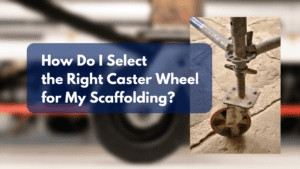
The scaffold caster not only gives the 3D structure a base but also lets the scaffold move around. The wheels can be locked, and the erected scaffold can be used. The casters are inserted into the static scaffold tube to simultaneously make it mobile and secure. This will facilitate a variety of construction projects in the vertical plane and on uneven surfaces. The worker will be able to relocate the scaffolding without difficulty.
This blog will elaborate more on how to choose a caster wheel and its benefits.
What are caster wheels?
A caster (or caster) is an unpowered wheel designed to be attached to the underside of a larger object (the “vehicle”) in order to facilitate its movement. In numerous industrial applications, such as platform trucks, carts, assemblies, scaffolding, and tow lines in plants, high-capacity, heavy-duty casters are utilized.
In scaffolding, the caster wheels are attached to the bottom of the scaffolding to help it move around the worksite.
What are the selection criteria for scaffold casters?
1. Select the appropriate size caster
The larger the diameter of the caster, the more labor-efficient and resistant it is to obstacles.
Scaffold casters are typically available in sizes from 5 to 12 inches. Smaller wheels around 5 to 6 inches suit lighter, indoor mobile scaffolds, while larger 10 to 12 inch casters are better for heavier loads and rougher outdoor job site surfaces, since bigger wheels roll over obstacles with less effort.
2. Select an appropriate material
Casters are categorized as super synthetic rubber casters, polyurethane casters, plastic casters, nylon casters, steel casters, high-temperature casters, rubber casters, etc. Casters made of various materials are used in various ground conditions and temperatures, and they must be selected based on the application.
3. Determine the load-bearing mass
For identical-diameter mobile scaffolding casters with varying load-bearing requirements, the manufacturer typically produces multiple models, primarily to produce wheels and brackets with varying thicknesses or materials. When the terrain is relatively flat, the single caster load equals the number of casters installed on the equipment divided by 1.2 (the insurance factor).
4. Choose the bracket
The two types of brackets are orientation and universal direction. Typically, the material is carbon steel. In addition to stainless steel, you can get various types of plating, such as spraying, galvanizing, copper plating, nickel plating, etc.
5. Determine the method of installation
Typically, you can use a screw rod, plunger, expansion rubber sleeve, etc. for a moderate to light load. Use the bottom plate or have the caster directly welded to the equipment for heavy loads.
6. Breaking and locking mechanism
Functionally, brakes are typically divided into brake wheels and universal brake brackets. There are also friction brakes, positive brakes, side brakes, etc. Caster brakes must be effective. When workers are on scaffolding, they must stay put. Workers could fall if it keeps rolling, swiveling, or moving.
Most scaffolding casters have an easy-to-access braking mechanism that anyone can kick into place to prevent movement while working. Scaffolding needs a locking mechanism, too. Once the scaffolding is up, make sure it doesn’t move by itself. A locking mechanism is needed to keep scaffolding in place while workers do tedious work above it.
What are the benefits of a scaffold caster?
1. Mobility
Scaffolds with casters are ideal for moving. All tradesmen and industrial maintenance workers can do their jobs quickly and easily without needing a large scaffold or manual conversions. So, scaffolds can be moved and secured flexibly in different areas.
2. Safety
Regarding securing casters on scaffolding, safety is of the utmost importance. Because they promote motion, wheels and casters reduce physical strains and demands on employees when moving large loads. With the addition of a braking mechanism, the safety features are enhanced.
3. Scaffold caster wheel capacity
Casters have the advantage of being able to support the considerable weight without breaking. As a result of the caster wheel‘s rotation around an axle and bearing race, it is subjected to significantly less direct pressure than a conventional wheel. Because the wheel turns instead of the chassis, its load-bearing capacity is significantly greater than that of a conventional wheel.
Scaffold caster safety measures
Scaffoldings are prone to accidents and mishaps if proper caster safety precautions are not observed. Follow these guidelines to avoid unwelcome occurrences:
Avoid overloading the scaffolding. The casters will have to bear the additional weight, and they will buckle if the weight exceeds their capacity.
Do not drop heavy loads on casters, as the initial impact can cause them to degrade and may also cause structural damage.
Do not roll the scaffolding at a high rate of speed, as it can injure people and cause damage to any obstacles in its path.
Always lock the scaffold caster wheel in place when it is not necessary for the scaffolding to move. If it begins to move without your permission, accidents may occur.
Ensure that you immediately tighten any loose components of the casters.
FAQ
1.What is the full form or meaning of a caster wheel?
A caster wheel is an unpowered wheel attached to the underside of equipment, such as scaffolding, carts, or machinery, to allow it to be moved easily. It differs from a standard wheel in that it’s typically mounted on a swiveling or fixed bracket rather than a fixed axle.
2. How much weight can a scaffold caster wheel hold?
Load capacity depends on the caster’s size, material, and bracket design. Larger diameter casters made of steel or high-density polyurethane generally support heavier loads than smaller or softer-material wheels.
3.Can I replace just one caster wheel on my scaffold, or should I replace all of them?
It’s best to replace scaffold casters in matching sets rather than individually. Mismatched wheel diameters or materials can cause uneven rolling and added strain on the frame.
4. What’s the best caster wheel material for outdoor construction sites?
Polyurethane or rubber caster wheels are generally preferred outdoors since they offer better shock absorption and durability than harder materials like nylon or plastic.
Wrapping Up
A caster is a non-powered wheel designed to be attached to the underside of a larger object and used to move it. Attached to the base of device-moving equipment, caster wheels provide mobility for these objects. They make it possible to move heavy objects with less force. Caster wheels require routine maintenance to extend their service life.
AAIT is a scaffolding company in Houston that has rich experience with advanced techniques. We provide relevant information with the best solution. We make sure that our 12-inch caster wheels meet safety regulations and can bear a maximum load. This ensures that your scaffold’s framework will be sturdy and robust.
Posted by aaitinternational on | Comments Off on Types of Scaffolding
In the construction world, scaffolding is a big deal, but not all scaffolding is the same. Here, we’ll focus on system scaffolding, breaking down the different types you might come across. Whether you’re a seasoned pro in the building game or just curious about how big structures get made, this post is for you.
Tube & Coupler Scaffolding, Frame Scaffolding, System Scaffolding (such as Cuplock and Ringlock), Cantilever Scaffolding, Suspended Scaffolding, and Trestle Scaffolding are the primary scaffolding types utilized in construction. Based on material efficiency, safety, height, and structure design, each variety meets particular construction needs.
We’ll guide you through the various types of scaffolding, showing how each one fits into the construction puzzle. It’s all about making your work easier and safer. So, if you’ve ever wondered about the scaffolding that dots our cityscapes, you’re in the right place. Let’s get started on this journey through the world of scaffolding.
The choice of scaffolding part depends on reasons like load capacity, ground conditions, climatic conditions, etc. But have you come across the terms “modular or system scaffolding“? It is the most advanced scaffolding system that can be employed at any construction site and displays a high degree of versatility.
This article will briefly describe the different types of scaffolding system
What is System Scaffolding?
Also known as modular scaffolding, is a type of scaffold system that comprises prefabricated individual components. It is based on the wedge coupling method that allows the interlocking of scaffolding components without the need for nuts and bolts. The junction points enable quick and easy connection of load-bearing items with greater rigidity. This system is highly efficient because of its enormous flexibility.
Types of Scaffolding System
1. Ringlock Scaffolding
Ring lock scaffoldingIt is the most sophisticated type of system scaffolding where angular flexibility is imperative. It requires minimum space for storage and is used to support and access structures in the construction industry, offshore construction, industrial maintenance, and shipbuilding.
Components:
Vertical posts: Standards that aim to give vertical support.
Ledger: Horizontal support and can also be used as guard rails.
Braces: Provide lateral support and obtuse angle guard rail.
Truss ledger: Increases the strength of scaffold for maximum weight-bearing capacity
Base: Adjustable screw jack can be used as a base.
Rosette clamp: Used at any point on the vertical tube that allows tube attachment at various angles.
2. Cuplock Scaffolding System
cuplock systemIt comes with a unique locking mechanism that allows fast erection. It consists of pre-engineered horizontal and vertical components that combine to provide the most stable structure. This system is known for its simplicity, lightweight, high-load capacity, and ability to accommodate more intricate structures.
Components:
Standards: Vertical tubes that have rotating cups on the top and fixture for the same at the lower end.
Ledgers: Horizontals that have forged blade ends.
Universal jack: Can be placed at the bottom or top of the scaffold to allow adjustments.
Transoms: Provides intermediate support with jaw-shaped ends.
Hop-up brackets: Supports two to three boards beyond the interior of the scaffold and increases the span of the working platform.
3. Kwikstage Scaffolding
This is a versatile type of system scaffolding that can be molded into any shape. It is widely used in situations where the facade of the building is complex. The individual components are easier to track, stack, transport, and join.
Components:
Standards: Are the uprights that support the weight of the entire scaffolding by resting on the base jack.
Ledgers: Horizontal tubes used to connect the standards.
Base jack: It serves as the foundation of the entire framework that has multiple height adjustments.
Boards: With an anti-slip surface, these are attached to ledgers to create the working platform.
Diagonal brace: Serve as a support for the scaffold tower to enhance stability
Trap door: The hook-on boards that have trap doors for easy access to platforms.
4. Frame Scaffolding
It is the most common system of scaffolding that is manufactured from round tubing and is available in several configurations. It has in-built sections of both a ladder and a walk-thru portal. Usually, to build a framework, two sections of frame scaffold are connected using diagonal braces/poles and arranged in a square configuration.
Components:
Frames: Gives lateral support to the 3D framework with in-built stair access.
Braces: It provides a rigid connection and holds scaffold members in a fixed position.
Castor wheels: Used as a rolling base that allows dislocation of scaffold framework from one place to another.
Planks: Used as a platform that provides a working platform for the work crew and has an anti-slip surface.
5. Shoring Props
These are the scaffold components used to support a building, vessel, structure, or trench with shores when on the verge of collapsing or undergoing repairs. It is usually applied to a slab framework. It consists of an inner tube, an outer tube, and a plate on the end. Shoring is done when-
The walls of building pr structures bulge out
Crack in the walls due to unequal settlement
For adjustments
The wall is to be enlarged
Shoring props provide advantages such as simplicity of assembly and disassembly, safety, efficiency, and great load-carrying capability. It also comes with no loose parts, so there’s no need to worry about losing anything.
5. Haki Scaffolding
Haki scaffolding is a type of scaffolding often used in construction and maintenance jobs. It’s popular because it’s easy to put together and can fit different kinds of buildings. Haki scaffolding is made up of basic parts like vertical poles, horizontal bars, diagonal supports, and extras to customize it for different jobs. It’s tough, stable, and safe, which is why many builders like using it.
What Are the Uses of Modular Scaffold?
Modular scaffolds are flexible structures used in construction, maintenance, and events. They help people reach high places safely for tasks like building, fixing, and setting up. They’re important in construction, entertainment, and industry because they make it easier and safer to work at different heights for various projects.
Advantages of Modular Scaffolding
Compared to traditional scaffolding, modular scaffolding offers several advantages that can benefit both construction companies and workers:
Efficiency and Speed: Building and taking apart things is faster because the parts fit together easily. This saves time and money on projects.
Versatility and Adaptability: Modular scaffolding can be changed to fit different shapes and sizes of buildings. So, it’s good for buildings that are a bit unusual. You can also adjust it to work at different heights and angles.
Safety: It’s safer to work on because the parts fit securely together. This helps reduce accidents and keeps workers safe.
Cost-Effectiveness: Even though it might cost more at the start, it’s cheaper in the long run. You can use it again and again for different projects, which saves money. Plus, putting it up and taking it down is quick, so you save on labor costs too.
Additional Benefits: Modular scaffolding is light and easy to move around. It doesn’t take up much space on the worksite. And, some types are made from materials that are good for the environment.
Scaffold distributors in USA play a crucial role in ensuring that construction projects have safe and reliable access solutions, helping workers perform their tasks efficiently and securely.
Disadvantages to Modular Scaffolding
While modular scaffolding offers advantages like speed and safety, it does come with some drawbacks:
Higher Initial Cost: Modular scaffolding costs more at the beginning compared to regular scaffolding.
Less Flexibility: Modular scaffolding is made for certain shapes. It might not work well for weirdly shaped buildings or might need more planning to fit right.
Design Complexity: Making a safe and good scaffold layout with modular parts can be harder for unique projects compared to regular scaffolding, which can adjust more easily.
What Are the Uses of Tubular Scaffold?
Tubular scaffolding is a really useful kind of scaffolding often seen on construction sites. It’s built from metal tubes, like steel or aluminum, joined together with clamps and fittings. This makes it easy to adjust and set up for different jobs.
Here are some of the most common uses of tubular scaffolding:
Helping Workers Reach High Places Safely: Tubular scaffolding makes safe platforms so workers can reach high parts of buildings. They use it for jobs like painting and fixing walls.
Holding Up Heavy Things: Tubular scaffolding is strong and tough. It holds up heavy stuff like bricks and roofing materials.
Making Temporary Roofs: Tubular scaffolding can build roofs temporarily over construction sites. It protects workers and materials from rain and sun.
Supporting Concrete Molds: Tubular scaffolding helps hold up molds while concrete dries. They use it for making walls, beams, and floors.
Setting Up Event Stages: Tubular scaffolding can be used to make stages for events like concerts and sports games.
Advantages of Tubular Scaffolding
Adaptability: Tubular scaffolding, also called tube and clamp scaffolding, is really versatile. It can be adjusted to fit almost any shape of building or structure because it uses tubes and clamps to connect. This makes it great for complex projects or surfaces that aren’t even.
Affordability: Tubular scaffolding can be cheaper to start with compared to other types, especially if you plan carefully to avoid wasting materials. Also, the parts are basic and can be fixed or swapped out individually, so they last longer.
Easy Setup and Removal: Putting together and taking apart tubular scaffolding is pretty simple because of the easy clamp connections. Experienced workers can do it quickly.
Disadvantages to Tubular Scaffolding?
Lost Parts: Clamps and other small components can be easily misplaced, especially on large jobs. Missing parts can slow down assembly and require replacements, impacting both schedule and cost.
Lower Load Capacity: The connection points of tubular scaffolding rely on friction to hold, which can limit the overall weight capacity compared to some interlocking systems. This may not be suitable for projects requiring very heavy loads.
Comparing Tubular Scaffolding to Modular Scaffolding
Feature
Tubular Scaffolding
Modular Scaffolding
Components
Individual tubes and clamps
Prefabricated frames, braces, and platforms
Assembly
Requires loose fitting and tightening clamps
Uses locking mechanisms for quick connection at designated points
Flexibility
Highly adaptable to any shape or size
Limited to pre-defined configurations
Speed of Assembly
Time-consuming and labor-intensive
Faster and easier to assemble
Cost
Potentially lower material cost
Generally higher initial cost
Skill Level for Assembly
Requires skilled workers for safe construction
Can be assembled with less specialized training
Suitability
Ideal for complex shapes and uneven surfaces
Best for regular shaped buildings and repetitive tasks
Safety
Relies heavily on proper assembly and inspection
Standardized components can enhance safety
Following OSHA scaffolding guidelines helps prevent accidents like falls or collapses, keeping workers safe while they do their jobs. Always make sure to adhere to these rules to maintain a secure work environment.
Where Can You Find the Best Modular and Tubular Scaffold?
It doesn’t have to be hard to find the best modular and tubular scaffold for your building or remodelling job. The important thing is to find providers who put safety, quality, and flexibility first. The best companies offer a variety of scaffolding choices to fit projects of all sizes and levels of difficulty. Having the right scaffold system is important whether you’re working on a high-rise building, a house or a structure for an event.
Companies with good names, track records, and a dedication to customer service are the ones you should look for. You should also think about those that offer full help, from planning and design to installation and takedown. By picking a supplier that meets these standards, you can be sure that the job will go well and that everyone involved will be safe.
At AAIT Scaffolding, a scaffold distributors in the usa, you can get really good scaffolding. We have different types of scaffolding such as modular, tubular, cuplock, ringlock, and shoring. Our stuff is top-notch!
Wrapping Up
Scaffolding is an integral part of construction work. The choice of scaffold depends on site conditions and your requirements. We hope that this blog has elaborated on types of scaffolding.
AAIT is a leading scaffolding distributor in the USA and possesses an array of scaffolding accessories. Our scaffold parts are made from high-strength structural steel alloy and come with galvanized plating. The in-house decks and all other accessories comply with OSHA regulations. We regulate scaffolding types and safety features such that they pose no harm to scaffolders and also give you the best ROI.
If you are looking for best-in-class system scaffolding and accessories, book a free quote today!
Posted by iDigitalise on | Comments Off on How to Choose a Scaffold System Online (USA Buying Guide)
Buying a scaffold system online might save you time and money, but if you choose the wrong one, you could put yourself in danger, break the law, or have to pay extra. Scaffold systems in the US have to follow tight OSHA rules, be able to hold big loads, and keep people from falling.
This tutorial tells contractors, project managers, and procurement officers how to find the best scaffold system online while making sure it is safe, meets all requirements, and works well for a long time.
Why Choosing the Right Scaffold System Matters
Scaffolding is more than just a temporary way to get to a job site; it is a structural structure that must properly hold workers, tools, and supplies at height.
Choosing the wrong scaffolding can lead to:
Breaking OSHA rules
Delays in the project
Unstable structure
Injuries to workers
Liability in the law
Before you buy something online, you need to know about the many types of scaffolds, how much weight they can hold, and the rules they have to follow.
8 Tips for Buying a Scaffold System Online
1. Understand the Different Types of Scaffold Systems
Find out which scaffold system is best for your project before you buy it.
Frame Scaffolding
Common for work in homes and small businesses
Simple to put together
Affordable
Ringlock Scaffolding
Heavy-duty and modular
Strong locking system that works in all directions
Great for big commercial and industrial projects
Pick the system based on how hard the project is, how high it needs to be, and how much weight it needs to hold.
2. Check OSHA and ANSI Compliance
OSHA 29 CFR 1926 Subpart L sets rules for scaffolding safety in the U.S.
Before you buy something online, make sure:
The system can handle four times the load it was meant to.
Guardrails work with and follow the rules.
Parts fulfil ANSI and OSHA standards.
The manufacturer gives load documentation
If you buy scaffolding that doesn’t meet the rules, you could fail an inspection and get fined.
3. Review Load Ratings Carefully
There is a maximum load rating for every scaffold system.
Think about:
How many people work on the platform
Weight of things
Tools and gear
Wind exposure
For tough jobs, you need stronger systems like ringlock scaffolding with built-in locks.
Always check load charts; never presume.
4. Evaluate Platform and Plank Quality
Platforms need to be solid, not slippery, and able to hold weight.
In the U.S., falls are the most common cause of scaffold-related injuries.
Make sure your system can handle:
Top and middle guardrails
Toe boards
Secure points of attachment
Fall protection compatibility is a must.
6. Verify Safe Access Components
OSHA says that safe access is necessary.
Look for:
Scaffold stairs
Brackets for ladders
Gates for access
7. Research the Supplier’s Credibility
It’s really important to check out the supplier when you buy something online.
Look for:
Contact information that is easy to understand
Details about the product
Documents for load testing
Information about the warranty
Reviews from customers
A good supplier should give you technical help and documentation.
8. Compare Total Cost — Not Just Price
The best choice isn’t necessarily the cheapest.
Think about:
Sturdiness
Quality of galvanisation
Availability of replacement parts
Performance over time
Following safety rules
A good scaffold system cuts down on expenditures for replacing it and for liability in the future.
Common Mistakes to Avoid When Buying Scaffolding Online
Not following OSHA rules
Picking the wrong type of scaffold
Not checking the load capacity
Buying parts that don’t work together
Not using guardrails and access tools
Only thinking about price
Avoiding these blunders keeps projects on time and safe.
Quick Scaffold Buying Checklist (USA Contractors)
Before you click “Buy Now,” make sure:
The right kind of scaffold (frame or ringlock)
System that follows OSHA rules
Checked the load rating
Included are guardrails.
Included is the access system
Confirmed the quality of the plank
Documents from the supplier are available
Review of the warranty and return policy
Frequently Asked Questions
What is the best scaffold system for commercial construction?
People commonly use ringlock scaffolding for commercial and industrial projects because it is strong and can be put together in different ways.
What OSHA standard applies to scaffolding?
Under 29 CFR 1926, OSHA controls scaffolding. Part L.
Can I buy scaffolding online safely?
Yes, but only if you check the load ratings, compliance paperwork, and the supplier’s reputation.
Should I rent or buy scaffolding?
Buying is a good idea for projects that happen more than once, projects that will be used for a long time, and big building jobs.
What is the difference between frame and ringlock scaffolding?
Frame scaffolding is easier to use and is often used for home projects. Ringlock scaffolding is modular, stronger, and better for complicated industrial tasks.
Final Thoughts
When you buy a scaffold system online in the US, you need to do more than just compare pricing. You need to check for compliance, load capacity, fall prevention, access systems, and supplier reliability.
Choosing the correct scaffold system keeps workers safe, makes sure the project follows OSHA rules, and helps it run smoothly for a long time.
Invest prudently, and always put safety and the strength of the structure first.
Posted by iDigitalise on | Comments Off on The 10 Different Scaffold System Types Used in Construction
Are you trying to find the best scaffolding system for your building project? The ten most popular scaffold system types used on residential, commercial, and industrial sites are broken down in this guide. These types include frame scaffolding, Single scaffolding, Kwikstage, double, cantilever, suspended and more. This brief comparison assists you as a contractor, builder, or project manager in determining which kind of scaffold best suits the safety, height, and financial needs of your project. Scaffold parts, used in construction, are temporary platforms to elevate, support the work crew, and aid the construction process.
It is an intricate framework of wooden platforms or pipes that maintain the structure properly. These systems allow workers access to heights, safety, attain better positions on walls, ceilings, windows & outer spaces; and enhance work efficiency.
There are various types of scaffold systems used in construction works used for different purposes.
Below mentioned are the types of scaffolding used in construction
1. Single scaffolding
Also known as bricklayer scaffolding, incorporates the single framework of standards, ledgers, and putlogs which are connected together.
These scaffold systems stand parallel to a wall by using standards i.e. vertical supports. The standards are attached to the ledger i.e. horizontal supports.
For a framework of standards & ledgers to stay parallel to the wall, putlogs are connected with the hole in the wall made at a distance of 1.5 m to the ledger. It is most preferred in brick masonry works.
2. Double scaffolding
Also known as independent scaffolding, incorporates two rows of scaffolding, one at a distance of 20-30 cm from the wall, and another 1 m away from the preceding one.
The putlogs are then placed which are supported by both frames. For additional support, rakers (are a type of tie that secures to a building) and cross braces (hold a part of the scaffolding system in a fixed position in relation to another) are provided.
It is most preferred in stone masonry works, where making holes in the wall isn’t feasible.
3. Cantilever scaffolding
Also known as needle scaffold, in which the standards are supported on a series of needles taken out through holes in the wall.
Needles are protrusions sticking out from a structure on which a platform sits. The needles may eject from the wall (single frame type cantilever scaffolding) or from inside the floors via opening (double frame type cantilever scaffolding).
It is employed in conditions where the ground does not have the capacity to support standards or when the upper part of the wall is under construction.
4. Suspended scaffolding
When the height is above 30 meters, the convenient way is to suspend the working platform from above the ground.
An electronic system supports the working platform to raise and lower as per the needs. The wires or chains are also used to suspend the platform from the roof in some cases.
Suspended scaffolding is often used in tasks like painting, cleaning, and repairing.
5. Trestle scaffolding
Also known as ladder scaffolding, the movable working platform is supported on movable tripods or ladders. It can be easily assembled & dismantled. It is used for indoor & outdoor purposes including repair, maintenance, warehouse services, and painting to a maximum height of 5 meters.
6. Steel scaffolding
Also known as tube & clamp scaffolding or tubular scaffolding it is a framework made of steel tubes fixed with steel couplers or fittings. It gives better strength, durability, and is fire resistant. It is easy to construct & dismantle. It is preferable for any structure building, even the odd-shaped ones, inside the plants, etc.
7. Patented scaffolding
These are ready-made scaffoldings made up of steel and are equipped with special couplings and frames. The working platform in this scaffold system is arranged on brackets that are adjustable at required levels.
It incorporates standards, ledgers, transom & base plate. The ledger has blades on both ends & standard has the cup locks throughout its length.
The locking cups have two elements namely- the bottom cup and top cup which are connected to ledgers to form an entire scaffold system connected by standards and ledgers.
It is preferable to facade scaffolds, birdcage structures, staircases, shoring structures, mobile towers, etc.
9. Kwikstage scaffolding
It incorporates standards, ledgers, basic jack, and hook-on boards. The locking system in Kwikstage scaffolding is –
The ledgers are secured by transoms in the V-shaped lock of standards
It is adaptable to commercial and residential projects.
It has a non-slip platform, galvanized steel scaffolding materials, a durable interlocking system, and is customizable, making it more popular.
10. Staircase Tower Scaffolding
It comprises steel access stairs and is connected with cuplock scaffolding. It is best to access the main scaffolding platform for work with greater safety. Workers can carry their tools via a ladder. It is a scaffolding to reach high elevations of a building.
With increasing construction lines, there is an increase in the demand for a scaffold system.
AAIT scaffold is a leading scaffold companies in Houston. We provide the basic building blocks of scaffolds and readymade scaffolds to ease your construction work with utter safety.
From scaffold tube clamps, ring lock systems, and cuplock systems, to providing aluminum scaffold planks; we are top scaffolding manufacturers and distributors; who are just a call away.



 Download