 Download
Ringlock, Cuplock, and Tube Clamp Systems: How to Plan the Right Mix for Large Sites
Large construction activities are broken down into work sections. A typical building wall, a narrow access point, an industrial unit and a structure with weird shapes may not require the same scaffold set-up.
One scaffold system is not necessarily the best option for the whole site. Contractors can mix and match ringlock, cuplock and tube clamp systems to suit the needs of the work zone.
The right combination will ensure that the team maximizes the use of materials, avoids material shortage, and prevents production disruption from taking place unnecessarily.
How Should Contractors Choose the Right Scaffold System?
Use Cuplock where a conventional or routine system is required, and where the need for flexible joints is present, use Ringlock. Use Tube Clamp scaffolding when there is a difficult condition at hand. The contractor should evaluate the layout, nature of construction, load requirements, access points, and time schedule to achieve the right mix.
Why Do Large Sites Need More Than One Scaffold System?
Large projects may contain numerous sorts of structures and work zones. Each area may require a distinct scaffold design.
For example a typical building elevation may have same arrangement on few storeys. Tanks, pipes, columns and tight spaces may be seen at an industrial site or refinery. Some areas may also require temporary access for inspection or maintenance operations.
Contractors can help themselves by using the right system in each zone:
- Minimize consumption of non-essential materials
- Improved scaffold planning
- Avoid changes at the last minute
- Assist the erection work
- More accurate inventory tracking
- Transfer items to/from work areas.
- Reduce delays caused by missing parts
Before ordering scaffolding materials, contractors should split the site into zones.
What Is a Ringlock Scaffolding System?
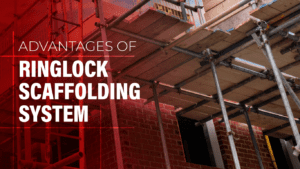
A Ringlock scaffolding system is a modular system with adjustable connection points.
Ringlock standards use rosettes where ledgers and braces can be connected. The method is beneficial for structures with varying angles, heights or access needs.
Ringlock scaffolding type:
- Building sites in industry
- Maintenance work zones and
- Big access platforms
- Structures of variable elevation
- Complex or curved layouts
- Areas needing flexible bracing
When Should Contractors Use Ringlock?
Ringlock scaffolding is an appropriate substitute in the case where the scaffold framework differs throughout the site area. It can help teams adjust the structure to fit complicated sites that comprise modular parts.
What Is a Cuplock Scaffolding System?
The Cuplock scaffolding system is a modular scaffold made up of vertical and horizontal modules connected through cups.
It works best for repetitive structures where the same bays of scaffolding are repeated throughout the elevation or construction site stage.
Cuplock scaffolding can be used for:
- Standard building elevations
- Commercial construction locations
- Repeated floor plans
- Big façade works
- Development of infrastructure
- Projects with reused materials in various phases
When Should Contractors Use Cuplock?
Cuplock can be a good alternative for simple repetitive arrangement. Contractors can estimate material needs more simply and transport components from finished zones to the next regions of work.
What Is a Tube Clamp Scaffolding System?
A Tube Clamp scaffolding system is a flexible scaffold that is made out of tubes and clamps.
This technique can be used where the sizes of the modular scaffolds do not appropriately fit the structure. Contractors can employ tubes and clamps around obstructions, uneven areas and odd shapes in buildings.
Tube Clamp scaffolding can be used for:
- Industrial maintenance facilities
- Pipe or columned structure
- Restricted access points
- Coarse surfaces
- Hard corners
- Temporary modifications
- Specialty access needs
When Should Contractors Use Tube Clamp Scaffolding?
Tube Clamp scaffolding can be helpful when the work zone needs to be customized. It allows contractors additional freedom in situations where a typical modular layout may not fit well.
Ringlock vs Cuplock vs Tube Clamp: What Is the Main Difference?
Each scaffold system has a different purpose. The optimal alternative is determined by the structure, project phase and work-zone needs.
| Factor | Ringlock System | Cuplock System | Tube Clamp System |
| Best suited for | Complex layouts | Regular layouts | Irregular spaces |
| Main benefit | Flexible connections | Easy planning for repeated areas | Custom setup around obstacles |
| Common use | Industrial sites and complex access | Building elevations and repeated floors | Maintenance areas and narrow spaces |
| Planning method | Zone-based material planning | Standard bay planning | Site-specific planning |
| Main materials to track | Standards, ledgers, braces, accessories | Standards, ledgers, braces, accessories | Tubes, clamps, couplers, and accessories |
This table provides a simple planing guide. The ultimate scaffold design shall depend on actual site conditions and safety needs.
How Can Contractors Plan the Right Scaffold Mix?
The ideal way is to break down the entire site into small work zones.
1. Identify Regular Work Areas
Begin with repeating plan pieces such as building elevations and comparable floor levels. In these places, Cuplock can be a practical choice.
2. Mark Complex Sections
Locate sites with varying angles, elevations or restricted access. These sections can also be evaluated for Ringlock.
3. Find Irregular and Restricted Spaces
Look for pipelines, tanks, columns, restricted access paths and odd shapes. Scaffolding with Tube Clamps may provide more flexibility in these areas.
4. Review Load Requirements
Look at the staff, equipment, tools and materials that will be on the scaffold.
OSHA standards requires all scaffolds and scaffold components to support their own weight plus four times the maximum authorised load. The scaffold also should be designed by a qualified individual and loaded as specified.
5. Prepare a Material List for Each Zone
List the essential standards, ledgers, braces, tubes, clamps, planks, jacks, ladders, stairs, gates and accessories.
6. Add Buffer Stock for Important Components
Stock up on large quantities of commonly used items such as planks, clamps, bracing, base plates, screw jacks and access accessories.
7. Store Each System Separately
Use of labeled racks and baskets for Ringlock, Cuplock and Tube Clamp materials . This can assist teams avoid mixing incompatible parts.
Need Help Selecting the Right Scaffold Equipment?
Each project has different requirements for access, layout and materials. A designed system mix can help your team prevent shortages and more efficiently employ scaffold materials.
[CONTACT A SALES REP.]
Example Scaffold Mix for a Large Project
The chart below illustrates how contractors might plan scaffold systems for various work areas.
| Work Zone | Suggested System | Reason |
| Main building elevation | Cuplock | Suitable for repeated layouts |
| Industrial equipment area | Ringlock | Useful for flexible access requirements |
| Pipe-heavy maintenance zone | Tube Clamp | Easier to plan around obstacles |
| Narrow access section | Tube Clamp | Supports a more flexible setup |
| Repeated upper floors | Cuplock | Materials can be reused across similar levels |
| Complex structure with changing heights | Ringlock | Offers flexible connection options |
The final configuration must always be checked by the appropriate technical and safety specialists.
How Can Contractors Avoid Inventory Problems?
Mixing several scaffold systems can provide versatility, but materials need to be tracked correctly.
Contractors shall record:
| Inventory Field | Details to Track |
| Scaffold system | Ringlock, Cuplock, or Tube Clamp |
| Component type | Standard, ledger, brace, tube, clamp, or plank |
| Product size | Length, width, or specification |
| Quantity available | Usable stock in storage |
| Quantity issued | Materials sent to the work zone |
| Quantity returned | Materials received after dismantling |
| Condition | Usable, damaged, or waiting for inspection |
| Buffer stock | Extra quantity kept for urgent needs |
| Reorder status | Materials that need to be purchased |
On large sites, tracking can be simplified by a spreadsheet, a barcode system or a QR-code method.
Scaffold System Planning Checklist
Before ordering scaffold equipment, contractors should verify the following:
- Has the site been broken down into work zones?
- Are the regular and complex areas clearly marked?
- Did you selected right scaffold system for each zone?
- Is there a materials list for each area?
- Any plan for buffer stock?
- Do you keep the various scaffolding systems separate?
- Are delivery dates connected to the erection schedule?
- Are returned materials inspected prior to reuse?
- Do you include access equipment and accessories?
- Has the final scaffold configuration been evaluated by appropriate personnel?
Plan the Right Scaffold Mix for Your Next Project
For large sites, a basic list of scaffold materials is not enough. Contractors should provide for the use of each system and the movement of components between zones and the times when extra stock may be necessary.
AAIT Scaffold provides Cuplock systems; Ringlock systems; Steel Tube Clamp scaffolding; planks; ladders; steps; gates; accessories; post beaches; racks and baskets for various project requirements.
Talk to the AAIT Scaffold experts to discuss your site needs and arrange for the right scaffold equipment mix.
[CONTACT A SALES REP.]