 Download
Types of Scaffolding
Comments Off on Types of Scaffolding
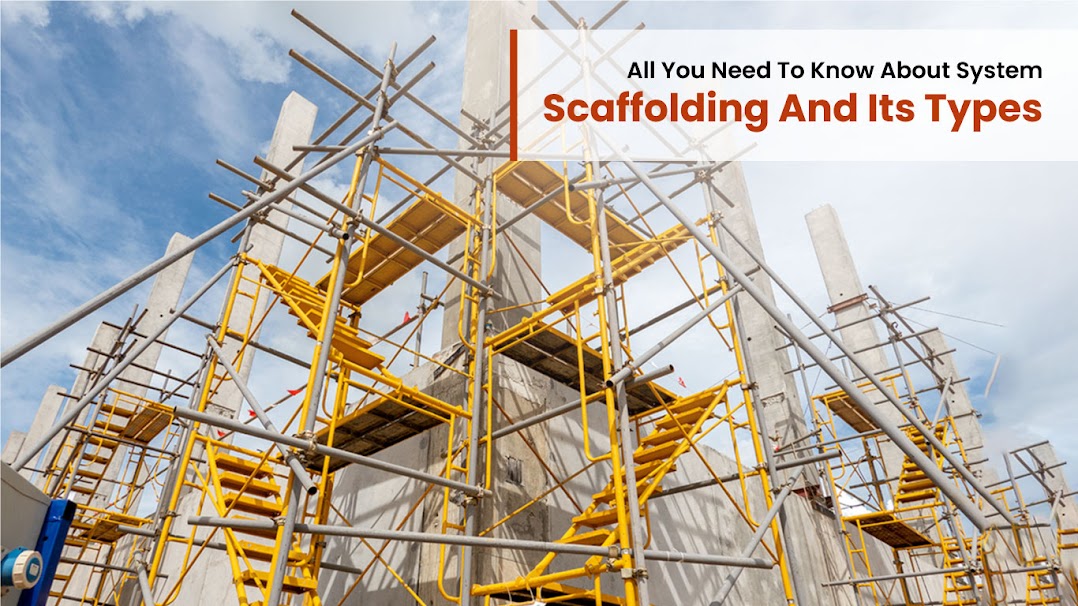
In the construction world, scaffolding is a big deal, but not all scaffolding is the same. Here, we’ll focus on system scaffolding, breaking down the different types you might come across. Whether you’re a seasoned pro in the building game or just curious about how big structures get made, this post is for you.
Tube & Coupler Scaffolding, Frame Scaffolding, System Scaffolding (such as Cuplock and Ringlock), Cantilever Scaffolding, Suspended Scaffolding, and Trestle Scaffolding are the primary scaffolding types utilized in construction. Based on material efficiency, safety, height, and structure design, each variety meets particular construction needs.
We’ll guide you through the various types of scaffolding, showing how each one fits into the construction puzzle. It’s all about making your work easier and safer. So, if you’ve ever wondered about the scaffolding that dots our cityscapes, you’re in the right place. Let’s get started on this journey through the world of scaffolding.
The choice of scaffolding part depends on reasons like load capacity, ground conditions, climatic conditions, etc. But have you come across the terms “modular or system scaffolding“? It is the most advanced scaffolding system that can be employed at any construction site and displays a high degree of versatility.
This article will briefly describe the different types of scaffolding system
What is System Scaffolding?
Also known as modular scaffolding, is a type of scaffold system that comprises prefabricated individual components. It is based on the wedge coupling method that allows the interlocking of scaffolding components without the need for nuts and bolts. The junction points enable quick and easy connection of load-bearing items with greater rigidity. This system is highly efficient because of its enormous flexibility.
Types of Scaffolding System
1. Ringlock Scaffolding
Ring lock scaffolding It is the most sophisticated type of system scaffolding where angular flexibility is imperative. It requires minimum space for storage and is used to support and access structures in the construction industry, offshore construction, industrial maintenance, and shipbuilding.
Components:
- Vertical posts: Standards that aim to give vertical support.
- Ledger: Horizontal support and can also be used as guard rails.
- Braces: Provide lateral support and obtuse angle guard rail.
- Truss ledger: Increases the strength of scaffold for maximum weight-bearing capacity
- Base: Adjustable screw jack can be used as a base.
- Rosette clamp: Used at any point on the vertical tube that allows tube attachment at various angles.
2. Cuplock Scaffolding System
cuplock system It comes with a unique locking mechanism that allows fast erection. It consists of pre-engineered horizontal and vertical components that combine to provide the most stable structure. This system is known for its simplicity, lightweight, high-load capacity, and ability to accommodate more intricate structures.
Components:
- Standards: Vertical tubes that have rotating cups on the top and fixture for the same at the lower end.
- Ledgers: Horizontals that have forged blade ends.
- Universal jack: Can be placed at the bottom or top of the scaffold to allow adjustments.
- Transoms: Provides intermediate support with jaw-shaped ends.
- Hop-up brackets: Supports two to three boards beyond the interior of the scaffold and increases the span of the working platform.
3. Kwikstage Scaffolding
This is a versatile type of system scaffolding that can be molded into any shape. It is widely used in situations where the facade of the building is complex. The individual components are easier to track, stack, transport, and join.
Components:
- Standards: Are the uprights that support the weight of the entire scaffolding by resting on the base jack.
- Ledgers: Horizontal tubes used to connect the standards.
- Base jack: It serves as the foundation of the entire framework that has multiple height adjustments.
- Boards: With an anti-slip surface, these are attached to ledgers to create the working platform.
- Diagonal brace: Serve as a support for the scaffold tower to enhance stability
- Trap door: The hook-on boards that have trap doors for easy access to platforms.
4. Frame Scaffolding
It is the most common system of scaffolding that is manufactured from round tubing and is available in several configurations. It has in-built sections of both a ladder and a walk-thru portal. Usually, to build a framework, two sections of frame scaffold are connected using diagonal braces/poles and arranged in a square configuration.
Components:
- Frames: Gives lateral support to the 3D framework with in-built stair access.
- Braces: It provides a rigid connection and holds scaffold members in a fixed position.
- Castor wheels: Used as a rolling base that allows dislocation of scaffold framework from one place to another.
- Planks: Used as a platform that provides a working platform for the work crew and has an anti-slip surface.
5. Shoring Props
These are the scaffold components used to support a building, vessel, structure, or trench with shores when on the verge of collapsing or undergoing repairs. It is usually applied to a slab framework. It consists of an inner tube, an outer tube, and a plate on the end. Shoring is done when-
- The walls of building pr structures bulge out
- Crack in the walls due to unequal settlement
- For adjustments
- The wall is to be enlarged
Shoring props provide advantages such as simplicity of assembly and disassembly, safety, efficiency, and great load-carrying capability. It also comes with no loose parts, so there’s no need to worry about losing anything.
5. Haki Scaffolding
Haki scaffolding is a type of scaffolding often used in construction and maintenance jobs. It’s popular because it’s easy to put together and can fit different kinds of buildings. Haki scaffolding is made up of basic parts like vertical poles, horizontal bars, diagonal supports, and extras to customize it for different jobs. It’s tough, stable, and safe, which is why many builders like using it.
What Are the Uses of Modular Scaffold?
Modular scaffolds are flexible structures used in construction, maintenance, and events. They help people reach high places safely for tasks like building, fixing, and setting up. They’re important in construction, entertainment, and industry because they make it easier and safer to work at different heights for various projects.
Advantages of Modular Scaffolding
Compared to traditional scaffolding, modular scaffolding offers several advantages that can benefit both construction companies and workers:
- Efficiency and Speed: Building and taking apart things is faster because the parts fit together easily. This saves time and money on projects.
- Versatility and Adaptability: Modular scaffolding can be changed to fit different shapes and sizes of buildings. So, it’s good for buildings that are a bit unusual. You can also adjust it to work at different heights and angles.
- Safety: It’s safer to work on because the parts fit securely together. This helps reduce accidents and keeps workers safe.
- Cost-Effectiveness: Even though it might cost more at the start, it’s cheaper in the long run. You can use it again and again for different projects, which saves money. Plus, putting it up and taking it down is quick, so you save on labor costs too.
- Additional Benefits: Modular scaffolding is light and easy to move around. It doesn’t take up much space on the worksite. And, some types are made from materials that are good for the environment.
Scaffold distributors in USA play a crucial role in ensuring that construction projects have safe and reliable access solutions, helping workers perform their tasks efficiently and securely.
Disadvantages to Modular Scaffolding
While modular scaffolding offers advantages like speed and safety, it does come with some drawbacks:
- Higher Initial Cost: Modular scaffolding costs more at the beginning compared to regular scaffolding.
- Less Flexibility: Modular scaffolding is made for certain shapes. It might not work well for weirdly shaped buildings or might need more planning to fit right.
- Design Complexity: Making a safe and good scaffold layout with modular parts can be harder for unique projects compared to regular scaffolding, which can adjust more easily.
What Are the Uses of Tubular Scaffold?
Tubular scaffolding is a really useful kind of scaffolding often seen on construction sites. It’s built from metal tubes, like steel or aluminum, joined together with clamps and fittings. This makes it easy to adjust and set up for different jobs.
Here are some of the most common uses of tubular scaffolding:
- Helping Workers Reach High Places Safely: Tubular scaffolding makes safe platforms so workers can reach high parts of buildings. They use it for jobs like painting and fixing walls.
- Holding Up Heavy Things: Tubular scaffolding is strong and tough. It holds up heavy stuff like bricks and roofing materials.
- Making Temporary Roofs: Tubular scaffolding can build roofs temporarily over construction sites. It protects workers and materials from rain and sun.
- Supporting Concrete Molds: Tubular scaffolding helps hold up molds while concrete dries. They use it for making walls, beams, and floors.
- Setting Up Event Stages: Tubular scaffolding can be used to make stages for events like concerts and sports games.
Advantages of Tubular Scaffolding
- Adaptability: Tubular scaffolding, also called tube and clamp scaffolding, is really versatile. It can be adjusted to fit almost any shape of building or structure because it uses tubes and clamps to connect. This makes it great for complex projects or surfaces that aren’t even.
- Affordability: Tubular scaffolding can be cheaper to start with compared to other types, especially if you plan carefully to avoid wasting materials. Also, the parts are basic and can be fixed or swapped out individually, so they last longer.
- Easy Setup and Removal: Putting together and taking apart tubular scaffolding is pretty simple because of the easy clamp connections. Experienced workers can do it quickly.
Disadvantages to Tubular Scaffolding?
- Lost Parts: Clamps and other small components can be easily misplaced, especially on large jobs. Missing parts can slow down assembly and require replacements, impacting both schedule and cost.
- Lower Load Capacity: The connection points of tubular scaffolding rely on friction to hold, which can limit the overall weight capacity compared to some interlocking systems. This may not be suitable for projects requiring very heavy loads.
Comparing Tubular Scaffolding to Modular Scaffolding
| Feature | Tubular Scaffolding | Modular Scaffolding |
| Components | Individual tubes and clamps | Prefabricated frames, braces, and platforms |
| Assembly | Requires loose fitting and tightening clamps | Uses locking mechanisms for quick connection at designated points |
| Flexibility | Highly adaptable to any shape or size | Limited to pre-defined configurations |
| Speed of Assembly | Time-consuming and labor-intensive | Faster and easier to assemble |
| Cost | Potentially lower material cost | Generally higher initial cost |
| Skill Level for Assembly | Requires skilled workers for safe construction | Can be assembled with less specialized training |
| Suitability | Ideal for complex shapes and uneven surfaces | Best for regular shaped buildings and repetitive tasks |
| Safety | Relies heavily on proper assembly and inspection | Standardized components can enhance safety |
Following OSHA scaffolding guidelines helps prevent accidents like falls or collapses, keeping workers safe while they do their jobs. Always make sure to adhere to these rules to maintain a secure work environment.
Where Can You Find the Best Modular and Tubular Scaffold?
It doesn’t have to be hard to find the best modular and tubular scaffold for your building or remodelling job. The important thing is to find providers who put safety, quality, and flexibility first. The best companies offer a variety of scaffolding choices to fit projects of all sizes and levels of difficulty. Having the right scaffold system is important whether you’re working on a high-rise building, a house or a structure for an event.
Companies with good names, track records, and a dedication to customer service are the ones you should look for. You should also think about those that offer full help, from planning and design to installation and takedown. By picking a supplier that meets these standards, you can be sure that the job will go well and that everyone involved will be safe.
At AAIT Scaffolding, a scaffold distributors in the usa, you can get really good scaffolding. We have different types of scaffolding such as modular, tubular, cuplock, ringlock, and shoring. Our stuff is top-notch!
Wrapping Up
Scaffolding is an integral part of construction work. The choice of scaffold depends on site conditions and your requirements. We hope that this blog has elaborated on types of scaffolding.
AAIT is a leading scaffolding distributor in the USA and possesses an array of scaffolding accessories. Our scaffold parts are made from high-strength structural steel alloy and come with galvanized plating. The in-house decks and all other accessories comply with OSHA regulations. We regulate scaffolding types and safety features such that they pose no harm to scaffolders and also give you the best ROI.
If you are looking for best-in-class system scaffolding and accessories, book a free quote today!