Posted by iDigitalise on | Comments Off on The Role of Bracing in Scaffolding: Types, Installation and Why It Matters for Safety
Bracing in Scaffolding is one of those things that may appear to be a small portion of an overall scaffold system, however; once you experience working with it closely you will understand how much this simple item creates/controls stability of the entire scaffolding system. We’ve seen teams rush into assembly without giving the bracing pattern a second thought, and the scaffold ends up feeling shaky or uneven. When you look at it properly, the whole setup depends on these simple steel members doing their job quietly. So this guide walks through the main scaffolding bracing types, what they actually do on site, and how to handle them the right way.
What Is Bracing in Scaffolding?
Bracing in scaffolding is any set of members added to hold the scaffold steady when workers climb or when heavy loads are placed on platforms. You know how a table with weak legs wobbles when you lean on it. A scaffold behaves the same way without the right bracing. The purpose of bracing in construction is to keep the frame stiff, reduce sway and prevent movements that could weaken the joints.
Purpose of Bracing in Construction Scaffolds
The general concept of bracing is very simple (create vertical stability). Bracing plays a critical role in all vertical elements of your scaffold preventing any potential side to side rocking of the scaffold and further creating stability while your workers are using it. In addition, it offers resistance against lateral forces that may exist such as wind, overloads or even people leaning against a guardrail. Without these parts in place, the scaffold would flex, and once it starts doing that, the whole thing becomes unsafe real quick.
How Bracing Improves Stability and Safety
Good bracing improves safety by keeping every vertical and horizontal at the right angle. This is one reason people say bracing in construction works as the backbone of the scaffold. It reduces lateral movement so workers feel steady when walking or lifting. If you’ve ever stepped on a platform that shifts slightly, you know how uncomfortable that can be. Proper bracing removes that feeling and also prevents the frame from twisting when adding height.
Main Scaffolding Bracing Types
There are a few common scaffolding bracing types used on most projects. Each one handles movement in a slightly different direction, and when these work together, the scaffold becomes strong enough for tough site conditions.
Diagonal Bracing Scaffolding (X-Bracing)
Diagonal bracing scaffolding is probably the most familiar. It forms that clear X pattern across panels, which locks the structure. This type controls sway in both directions and gives the scaffold a rigid shape. Teams often add these diagonals during the earliest stages because once the height increases, they’re harder to adjust.
Horizontal Bracing
Horizontal braces sit between the standards at platform levels. These parts look simple, but they stop the scaffold from spreading. They help keep the structure square and steady, especially when there’s a lot of movement or tools being handled on the deck.
Longitudinal and Transverse Bracing
These braces run along the length or width of the scaffold. They reduce movement along the run of the scaffold and tie sections together. Without them, different bays might move independently, which is risky at height. When you add these correctly, the scaffold acts like one solid frame.
Where Bracing for Scaffolding Is Required
There are certain conditions where you need extra bracing without question. Every safe site treats these as standard practice.
During Scaffold Erection and Height Expansion
When the scaffold is going up, it’s at its weakest. So bracing for scaffolding becomes essential during each stage. As the structure grows taller, the wind catches it more easily, and even a small lean at the bottom turns into a big tilt at the top.
For Tall Structures or High Load Conditions
Tall scaffolds depend heavily on bracing because of the extra weight they’re holding. Heavy-duty bracing in scaffolding reduces strain on joints and transfers forces evenly.
In High Wind or Unstable Ground Environments
Sites with sandy, soft, or uneven soil require more bracing because the base might shift. Windy zones need stronger diagonal bracing scaffolding since gusts push against the entire setup constantly.
How to Install Scaffolding Bracing Correctly
Correct installation helps more than anything else. Even strong braces won’t work unless the setup is done the right way.
Planning the Brace Pattern Based on Height and Load
Before installing anything, a supervisor usually plans the bracing layout. The pattern depends on how high the scaffold will go and the loads that will sit on it. Some teams use a repeating pattern so the load runs across the scaffold evenly.
Fixing Braces with Pins, Clamps or Anchors
Braces must be fastened using the right pins or clamps. You know how a single loose pin can cause trouble. When clamps are applied firmly, the brace stays tight even when workers carry tools or materials across the platforms.
Ensuring Squareness, Alignment and Leveling
During installation, you want every piece to sit square. If one vertical leans slightly, the whole frame becomes off balance. Checking with simple tools helps avoid surprises once the scaffold is in use.
Benefits of Proper Bracing in Construction
The immediate benefit of getting used to good bracing practice is that you will appreciate the benefits of this type of bracing on a daily basis.
Better Structural Strength and Reduced Sway
In addition, strong bracing provides a better feel to those working on a regular basis, as it reduces the amount of swaying that frequently occurs at busy job sites.
Safe Load Distribution Across the Scaffold
By using bracing, you will experience less of the lateral movements that can occur when a person is in the process of placing large, heavy loads into place on top of the scaffold.
Higher Worker Safety and Accident Prevention
Safety always improves when the scaffold doesn’t move unexpectedly. Stability avoids slips, falls, or bending frames.
Common Mistakes to Avoid in Scaffold Bracing
Even experienced teams slip up sometimes. A few mistakes show up more often than they should.
Incorrect Brace Positioning
Braces placed in the wrong bay reduce stability instead of adding to it. It’s a simple mistake but a dangerous one.
Loose or Missing Connections
Sometimes clamps loosen with time. If nobody checks them, the brace becomes almost useless.
Ignoring Regular Inspection
Daily inspection keeps the scaffold safe. A quick walk around the setup usually helps spot problems early.
Best Practices for Reliable Bracing in Scaffolding
There are a few habits that make a huge difference in long-term stability.
Follow Manufacturer Guidelines
Manufacturers usually give clear instructions. These guide what type of bracing in scaffolding works best for certain heights or loads.
Inspect All Pin, Clamp and Joint Connections
A quick check before starting work every morning can save a lot of trouble.
Recheck Bracing After Modifications
Anytime the scaffold grows in height or a platform shifts, rechecking braces becomes necessary.
FAQs on Scaffolding Bracing
What type of bracing is best for tall scaffolding?
Diagonal bracing provides the most strength when building a tall scaffold because it effectively resists lateral sway.
Why is diagonal bracing essential for scaffold stability?
It locks the scaffold’s frame into a stable form and provides resistance both vertically and laterally to movement.
Can scaffolding be used without cross bracing?
Most systems need cross bracing for safety. Without it, lateral forces can twist the structure.
How often should scaffold bracing be inspected?
Daily checks are ideal, and extra checks after storms or heavy usage help too.
Is bracing required for every scaffold system?
Most scaffold types rely on bracing in one way or another, because stability always matters.
NOTE: Builders are required to follow OSHA and ANSI guidelines when installing and using scaffolding systems.
Posted by iDigitalise on | Comments Off on Why Aluminum Scaffold Planks Are Replacing Traditional Wooden Planks in 2025
The Evolution of Scaffolding Planks
Construction is an industry of change. As sites demand faster turnaround, stronger safety and longer-lasting gear, materials evolve. One of those changes is moving from wooden-scaffold planks to aluminum. The old wooden scaffold planks once dominated many jobs. Although wooden planks served their purpose at one point, the negative attributes are becoming clearer. In enters the Aluminium Scaffold Plank to provide a new level of benefits to construction sites when durability, ease and safety matter even more in 2025.
From Wood to Aluminum: A Brief History of Scaffolding Planks
Wooden planks have been used for scaffolding since scaffolding itself became common. They are easy to source, relatively cheap, and reasonably effective. Industry sources identify that wood has a good friction surface for the price and is a means of keeping costs down in project development; however, wood does not hold up very well in a test of time in varying degrees of moisture, rot and heavy loads over a long period.
As construction demands increased, more durable and less maintenance-intensive options emerged. Aluminum scaffold systems and planks started becoming viable, thanks to better material processing and cost reductions. Slowly, aluminum began replacing wood and other materials in many scenarios.
Why Builders Are Choosing Aluminum Scaffold Planks in 2025
Now in 2025 the trends are clear. Builders and contractors are choosing aluminum because they see long-term savings, safer work conditions and less hassle. Recent articles show aluminum scaffolding and planks are lighter, more corrosion-resistant and easier to move, assemble and maintain.
When you add the requirement to follow OSHA scaffold safety standards on every site, switching to better-performing materials makes sense. Also, with increasing emphasis on sustainability and reduced waste, aluminum’s recyclability becomes a factor. The result: aluminum scaffold planks are no longer niche; they’re becoming mainstream.
Benefits of Aluminum Scaffold Planks
Lightweight Design for Easy Handling of Scaffolding Planks
The most obvious advantage of aluminum scaffold planks is that they are much lighter than a comparable wooden or steel plank. This means fewer workers are needed to move them, less strain, and quicker repositioning. Industry sources note that aluminum scaffolding structures allow faster assembly and less fatigue.
On a busy site, being able to shift the scaffold platform or plank without a big crew is a genuine efficiency boost.
Durability and Long Lifespan Compared to Wooden Planks
Wooden planks degrade. Wooden scaffold planks can absorb moisture as well as warp, crack and become weak over time. On the other hand, aluminum has exceptional durability because of its strength-to-weight ratio and will not warp or crack like wood does. Once the surface is scratched, aluminum immediately creates an oxide layer to protect the integrity of the planks from continuing to deteriorate.
For individuals who aim to address long-term considerations, this transpires to mean fewer replacements, fewer maintenance interruptions and enhanced reliability.
Low Maintenance and Resistance to Weather Damage
Rather than wood, which may need treatment, sealing or replacement after continuous exposure to harsh weather, aluminum scaffold planks also resist corrosion, rust and rot. This property of aluminum scaffold planks makes for a great platform in outdoor conditions or working areas with variable weather conditions.
Less maintenance affects downtime while saving money over the lifespan of the purchased equipment.
Anti-Slip Scaffold Plank Surface for Improved Safety
Safety should also be factored in. Many modern aluminum scaffold planks now have anti-slip surfaces, coatings, or grooves that support worker grip. When combined with the structural benefits of aluminum, this makes them safer underfoot than many traditional wood boards, which might become slippery when wet or worn.
Incorporating an anti-slip scaffold plank surface is a clear step toward safer temporary scaffolding platforms, especially when compliance with OSHA scaffold safety standards is a requirement.
Aluminum Scaffold Plank Features You Should Know
Telescoping and Adjustable Options
Modern aluminum scaffold planks often allow adjustable lengths, telescoping, or modular design that suits temporary scaffold platforms well. These properties allow the plank to adjust to different spans, widths, or configurations on a job site rather than needing multiple sizes of wood boards.
That flexibility saves inventory, reduces waste and allows faster scaffold plank installation guide steps.
Scaffold Plank Load Capacity and Strength
Although an aluminum plank weighs less, engineering may help with load characteristics while remaining a building material when used properly. Manufacturers specify rated capacities to match job requirements. Industry commentary notes aluminum systems scaffold options can offer high strength while reducing weight.
Of course, one must always check the plank’s rated load and ensure the platform and stub structure support it. Overshooting load is still one of the major risks on scaffolding.
Compatibility with Temporary Scaffolding Platforms
Because aluminum scaffold planks integrate well with many scaffold systems, they fit frames, platforms, tie-ins and guardrail configurations and become a viable option for temporary scaffolding platforms across diverse sites. The modular nature of aluminum systems also supports quick assembly, relocation and reuse.
For contractors who move from site to site, being able to reuse planks and reposition quickly is a big win.
Buying and Installing Aluminum Scaffold Planks
Where to Find Scaffold Plank for Sale
Looking for a scaffold plank for sale? You’ll find suppliers and manufacturers specializing in aluminum systems, accessories and individual planks. Because aluminum has become more common, many construction equipment suppliers list aluminum plank options alongside traditional wood. It pays to compare rated load, length, anti-slip surface, compatibility and warranty.
Check that the product meets relevant standards, and ask about compatibility with your existing scaffold frames or platforms.
Step-by-Step Scaffold Plank Installation Guide
A good scaffold plank installation guide will include steps like
Verify the platform frames are level, square and stable.
Select aluminum scaffold planks of correct length and rated capacity.
Place planks securely on scaffold ledgers or supports, ensuring full bearing at the supports.
Connect or lock planks in place where required to avoid movement.
Install guardrails and toe boards around the platform edges.
Perform a full safety inspection. Check deck condition, anti-slip surface, plank securement, and load distribution.
Following a scaffold plank installation guide helps to align practice with requirements and ensures your temporary scaffolding platforms are built safely.
Following OSHA Scaffold Safety Standards on Every Site
No matter how good your planks are, if you ignore regulations, you’re risking your crew and your project. The Occupational Safety and Health Administration (OSHA) scaffold safety standards cover platform widths, load capacities, guardrails, tie-ins and worker training.
Using an aluminum scaffold plank does not eliminate use of these standards; you will still need to check the planks to confirm strength, anti-slip surface, access and support your loads as needed. It is non-negotiable to use the plank as an overall scaffold system safely and within standards.
Comparing Aluminum vs Wooden Scaffolding Planks
Cost vs. Longevity Analysis
In general, wooden planks are cheaper initially than aluminum. However, wooden planks have a shorter lifespan, require ongoing maintenance, are prone to weather damage, and can degrade faster than aluminum. In addition, multiple publications indicate that the long-term value of a plank made from aluminum is ultimately better than wood.
As such, in terms of cost versus benefits, in view of the lifespan of aluminum, the labor savings, and lower replacement frequency, large aluminum scaffold planks are a better investment.
Strength and Load-Bearing Capabilities
Wood can perform well under load if properly maintained and used properly, while moisture or rot can really compromise wood over time. Aluminum planks are engineered with consistent material properties and are less susceptible to environmental wear. That said, you always need to select the correct plank rating. Aluminum many times gives better consistency, but you must still match the platform design and loads.
In short: wood may still work in some cases, but aluminum generally offers stronger, more reliable performance for many jobs in 2025.
Environmental Impact and Sustainability
From an ecological perspective, the benefits of aluminum are clear. Aluminum scaffold planks are a fully recyclable material with no degradation, minimize waste, and promote sustainability. Wood is renewable, but treated timber may use chemicals, and more often than not, once wood fails, it ends up in the landfill. Furthermore, wood is subject to physiological deterioration, which means it ultimately contributes to even more replacements and, in the long run, adds to more waste.
By choosing to use aluminum scaffold planks, you are supporting a greener approach to construction practices, which is generally accepted as the trend.
Conclusion: The Future of Aluminum Scaffold Planks in Construction
Key Takeaways for Builders and Contractors
Aluminum scaffold planks are lighter, easier to maneuver, and easier to reposition than wood.
Compared to wood, aluminum scaffold planks offer more durability and resistance to weather and usually feature an anti-slip surface, which increases safety.
Modern factors such as adjustable lengths, high load capacity and adaptability with temporary scaffolding platforms add flexibility at the site.
While aluminum has a higher upfront cost than wood, long-term savings include reduced replacement costs, lower maintenance, and sustainability.
Regardless of your choice of plank material, you must adhere to OSHA scaffold safety standards at all sites you work on, inspect the scaffold regularly, and follow a scaffold installation guide.
Why 2025 Is the Year to Make the Switch to Aluminum Scaffold Planks
Construction is evolving. Jobs are faster, regulations stricter, and safety attention higher. In 2025 the shift toward higher efficiency, sustainable choice and safer practices is a strong trend. Aluminum scaffold planks fit that trend perfectly. They are no longer just a premium option; they’re becoming the practical standard.
If you haven’t considered switching yet, this year makes a strong case for it. The performance, longevity and safety benefits align with what modern job sites demand.
Frequently Asked Questions (FAQs)
Are aluminum scaffold planks safe for high-rise construction?
Yes. As long as the aluminum planks are properly rated for load, the planks are included in a scaffold system that is properly engineered, and you follow the same guidelines for the platform’s compatibility and bearing support and any other requirement that OSHA has for scaffolds.
How does the cost of aluminum planks compare to wooden planks over time?
Even though an aluminum plank is more expensive, the durability and lower maintenance and replacement schedules often translate to a cost-effective option.
Can existing wooden scaffold platforms be upgraded to aluminum planks?
In most cases, you can usually replace the wood planks with aluminum, provided the load requirements for the platform are considered, the deck width supports the new planks and the new planks are compatible with the cradle for the support to the platform. Typically, you check with your scaffold provider.
Do aluminum scaffold planks require special maintenance?
No heavy maintenance is required. Unlike with wood, aluminum does not rot or warp. While you still need to visually inspect it and make sure the anti-slip features are working and that they remain clean, major maintenance is minimal.
How do I ensure the scaffold system complies with OSHA scaffold safety standards when using aluminum planks?
Make sure the scaffold platform is designed with planks rated for the proposed load, and that guardrails, toe-boards, tie-ins, access, and fall protection measures are in place and that the scaffold has been inspected with your site’s safety program.
Posted by iDigitalise on | Comments Off on Scaffolding Braces | Benefits – Importance – Types
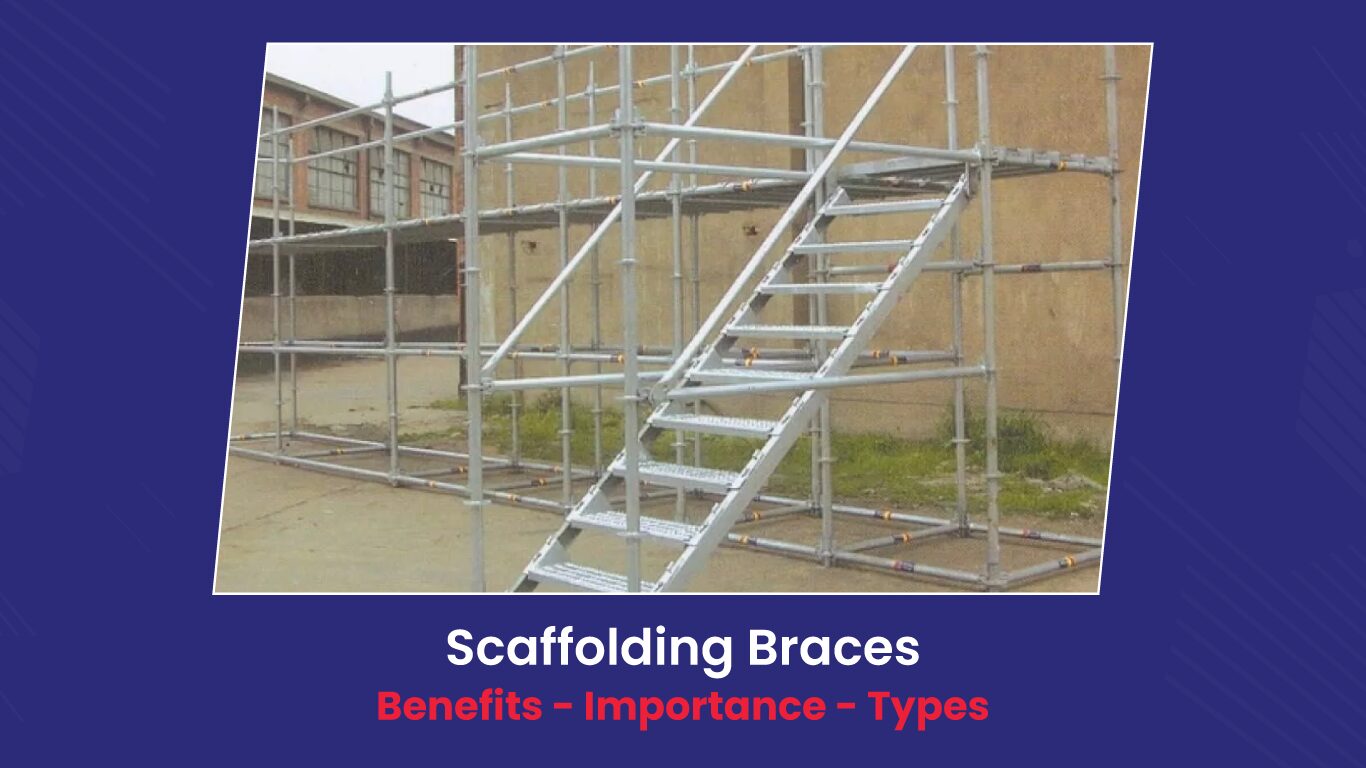
When workers are building a scaffolding structure, they always need to use braces. These offer many benefits beyond stability. Proper placement of the braces also preserves the integrity of the scaffolding structure. But do you really know the different types of scaffolding braces? In this article, you will know more about scaffolding braces and their types.
What Are Braces in Scaffolding?
In the construction domain, it’s important to ensure stability while using the scaffold. Hence, when workers assemble the scaffold, they use braces. These refer to connections that hold the scaffold components in a certain position. If you fail to set up the braces, the scaffolding structure becomes weak and unsafe for use. Let’s check out the different types of scaffolding braces.
Brace Scaffolding Types
When you encounter braces at the market, you will notice a variety of types. Here are some of the braces commonly used by workers.
Diagonal Braces Such braces place the scaffold tube diagonally with the vertical and horizontal members.
Cross Braces Cross braces occur when the tubes are placed diagonally and cross one another. The center joins the members as they form an X shape.
Longitudinal Braces Elements positioned along the scaffold’s length are known as longitudinal braces. They connect the vertical posts with one another to ensure stability.
Plan Braces The scaffolding structure positions these elements horizontally and diagonally within its plane. Apart from offering additional stability, these elements avoid lateral motion during tasks.
Transverse Braces Traverse braces are components placed diagonally across the scaffold’s width. These provide lateral stability because they connect vertical posts on opposite sides.
Dog-Leg or Zigzag Braces Workers arrange zigzag braces in a zigzag pattern. These often connect the vertical posts on opposite sides of the structure.
Requirements of Scaffolding Bracing
While workers are setting up the scaffold, it’s important to ensure stability and safety. Here are some requirements for bracing.
>> Before placing the braces, the material should be strong to withstand loads. Using cross or diagonal braces can also help to ensure stability.
>> As per OSHA standards, it’s necessary to use braces with a height up to 26 feet. This is the standard for a three-foot distance.
Bracing requires adherence to specific design guidelines. Professionals should also calculate the load-bearing capacity.
Workers must follow certain instructions when installing braces. Placing the braces at the correct angles also helps to enhance stability.
Brace Scaffolding for Sale
When you’re looking for braces, an online search can help you find suitable ones. Moreover, you will also find braces in popular online stores. If you can’t afford to buy the braces, then consider ones made in China. You can easily find such types of braces on websites like AliExpress, Alibaba, and more.
What is the purpose of cross-braces in scaffolding?
Cross braces help prevent the vertical members from swaying. Once the braces are in place, the scaffolding structure remains upright at all times. Moreover, cross-bracing prevents accidents that may occur due to dwanging or swaying.
Brace Scaffolding Cross Brace Sizes
The size of cross braces varies depending on the scaffolding structure. Moreover, workers will have to use braces of appropriate sizes based on the construction project. However, the standard sizes of cross braces include 8’ x 4’, 10’ x 4’, 7 x 3’/4’, and 10’ x 27.75”. However, many suppliers will provide braces in larger than usual sizes.
Cross Brace Scaffolding Price
The overall cost of scaffolding braces will vary depending on the dealer. However, braces are typically priced between $10 and $35. If you purchase a large quantity of braces, the cost will be more affordable. On the other hand, when you consider buying braces from Chinese manufacturers, the rate is lower.
How can I choose the best brace scaffolding available in the market?
Many factors have to be considered before buying scaffolding braces. Let’s check them out one after the other.
Manufacturer Firstly, you need to consider a supplier before selecting the braces. Even when they deal with the same range of braces, they may differ.
Price
Price is another aspect to consider before making a purchase. If the braces are affordable, then it doesn’t mean they are poor in quality. But high prices mean you must check braces durability.
Material The material of the braces also matters most before making a purchase. If you’re concerned about strength, then go for galvanized steel braces. However, you should consider aluminum braces as they remain unaffected by chemicals. The outdoor environment around aluminum braces also doesn’t oxidize them.
Safety Lastly, ensure that the braces are safe to use. This relates to the scaffolding structure’s setup and worker safety.
Where can you purchase the best scaffolding braces?
When you’re looking for scaffold braces, you’ll find many companies worldwide. However, for the best braces, you should connect with organizations in Europe and the US. Way ahead, many organizations get in touch with Chinese companies for manufacturing the braces.
If you’re looking for good-quality braces, then you can get in touch with AAIT Scaffolds.
Benefits of Choosing AAIT’s Brace Scaffolding
When you approach AAIT for scaffolding braces, we use high-quality material that is resistant to environmental conditions. We ensure that our braces meet safety standards for various construction projects. Moreover, we offer different types of braces to suit the project requirements and the scaffolding configurations.
Posted by aaitinternational on | Comments Off on Why Aluminum Scaffold Planks Are An Ideal Choice For Scaffolding System?
The use of scaffolding started over 17,000 years ago. In antiquity, the scaffolding was made of wood and secured with rope knots. Today, the scaffolding is made from low-alloy aluminum and steel. This is to enhance flexibility that reduces resistance to stress.
Boards in the scaffold system provide a working surface for scaffold users. Wood has been a popular building material for its strength and requires frequent maintenance. This makes wooden planks less desirable. The best alternative to this is the use of steel and aluminum scaffold planks.
What are scaffolding planks?
Scaffold planks are temporary structures used to provide support and a stable work platform for scaffold users. Today, aluminum has been the material of choice for most construction projects as it comes with additional advantages over traditional wood and other alternatives. Aluminum scaffold planks are light in weight and enhance the stability of the scaffold.
Let’s check out the features of wood and aluminum scaffold planks.
Features
Aluminum Scaffold Planks
Wood Scaffold Planks
The ability to withstand the breeze
✔
✔
Sweeping water mechanism with a full rain-screen system.
✔
✔
Available with concealed fasteners.
✔
🗙
UV finished protection
✔
🗙
Eco-friendly planking solution
✔
✔
Clip & Slide installation
✔
🗙
Exceeding the criteria for rain-screens in the building code
✔
🗙
Fire resistance
✔
🗙
Benefits of Aluminum Scaffold Planks over Wood Scaffold Planks
1. Enhanced stability
This is an important criterion when selecting scaffolding planks. Due to the structural build-up of aluminum planks, they offer greater stability than wood planks. Regardless of the height and weight being placed on aluminum planks, they offer greater dependability. These planks are set up with strengthened joints, allowing the entire scaffold structure to bear more weight than what is usually required.
Wooden planks, on the other hand, are fibrous and may easily cave in. This decreases the load-bearing capacity of the plank and compromises the aspects of work on-site.
2. Light in weight
Aluminum is lighter in weight than wooden boards. Being light in weight, one can easily assemble, disassemble, and carry the boards from one site to another. This also makes transportation and storage easy. Aluminum planks provide easy set-up as compared to heavy wooden boards, which require a lot of manpower.
In cases where scaffold users need to dismantle the platform every now and then to complete minor scaffold chores, aluminum planks are best suited.
3. Low maintenance
Compared to other scaffolding plank alternatives, aluminum frames are usually maintenance-free. While steel requires regular repainting to keep it from rusting and eroding, wood tends to deform and deteriorate with time. Aluminum does not contain steel or iron, which prevents the boards from turning corrosive.
Aluminum planks do not disfigure or oxidize with time, which is the usual case with wood and steel scaffolding planks for sale.
4. Cost-effective
The boards need different components for fixtures. Steel and wooden boards require more components to maintain stability. This will increase the cost of building scaffolds. The best alternative is aluminum scaffolding planks, which are durable and require fewer accessories for set up.
5. Enhanced durability
Wooden boards, when exposed to climatic conditions, undergo decay and, in extreme cases, may cause premature decay. This will make the boards unstable and susceptible to rupture. This is not the case with aluminum boards. They are anti-rust, and invulnerable to wrapping and cracking. This makes aluminum planks safer and an ideal choice for structural integrity.
Final Words
Aluminum scaffolding planks are stable, secure, light in weight, durable, cost-effective, and low-maintenance scaffolding solutions. They are the safest means of support for the scaffold users, as well as having a long life that saves additional costs.
AAIT is a leading scaffold product distributor in the USA. The in-house aluminum planks for sale are versatile and require minimal additional scaffold material for support. It enhances the stability of the entire structure. The aluminum planks give the best return on investment and are an ideal choice for any construction work.
Posted by iDigitalise on | Comments Off on Why Quality Scaffolding Planks Matter?
Scaffolding is a temporary structure used at every construction site to support a work crew and provide access to construction projects. Workers tend to climb the scaffold in order to access higher heights and accomplish tasks. They stand on a platform that supports their weight and the weight of their tools.
The scaffolding accessories used for this support are the planks. These planks are temporary platforms installed at work sites, and they are mounted on supports. They should be made from quality materials, as they serve as workstations on which workers rely. The aluminum scaffolding planks should be made of high-quality materials to ensure the complete safety and load-bearing capacity of the scaffold.
In this article, we shall assess the importance of quality scaffolding boards.
What are scaffolding planks and why are they important?
Planks are most commonly used to create a sturdy platform for working at high heights, such as building and inspection sites. They are used as platforms and are available in single- and double-sided varieties. There are retractable models with adjustable board lengths as well as fixed-length models with fixed lengths. The type that is most suited to the construction site can be chosen.
The most prevalent materials are aluminum and steel, and non-skid surface treatments are often used. Connecting single pipes and struts using clamps and joint brackets is important to fix scaffolding boards. When choosing and erecting scaffolding planks, users should consider the total length and breadth of the plank, as well as whether its maximum working weight will be sufficient.
A scaffold plank should-
Be even and uniform in thickness
Be fixed precisely and secured properly
Have no cracks
Be slip-resistant
Be fixed in a position with no gaps in between the planks
Not be exceeded with load limits
Why is the quality of scaffolding planks important?
Scaffolds are meant to hold huge loads. Hence, it is important that they must be robust, dependable, and secure.
1. Scaffolding planks provide support
Planks provide support and a secure foothold for employees. Thus, to ensure safety, the material used should be thick enough and adequately strong to support the entire weight of employees and tools carried. The uneven surfaces should be removed. In the event of any gaps, those should be filled with infill planks to ensure further stability and safety.
2. Precisely adjoint planks
All the planks are to be leveled. An inclined platform is unlikely, especially when the supporting frame is cleverly elevated. A leveling check is recommended in case of any setup error. This check can be done in two stages-
a. Inspection of the tower for orientation
b. Inspection of each plank for quality and fixtures
3. Platform spacing
Planks are placed on top of the panels. The planks are slip-resistant. This makes them safe enough to access people and tools. Care should be taken while fitting planks; i.e., there should be no gaps in between the two planks.
OSHA quality standards for scaffolding planks
OSHA regulations specify and address information for scaffolding accessories. Below are the specifications for scaffolding planks for sale.
1. Scaffold planks must be lumber grading
Scaffold-grade lumber is designed to resist stresses that standard construction-grade wood cannot (which is only two-thirds the capacity of scaffold-grade). Using construction-grade timber on a scaffold platform is not only against OSHA rules but is also a risky practice that might lead to a fatal occurrence.
2. Wood condition
Cracks, splits, and notches will appear as the wood matures and reacts to use. These will vary in severity according to the weights carried by a plank, the weather it has been exposed to, how long it has been in use, and so on.
3. Scaffolding planks should not be painted
Aluminum Scaffold planks with accumulated layers of paint, plaster, etc. are not authorized to stay in service since their condition cannot be determined. Under these coverings, dangerous splits may be masked.
Final Word
Scaffolding planks, being the support for employees, should be properly maintained and detected. This will provide a fruitful environment for them to access greater heights.
AAIT Scaffold provides best-in-class aluminum scaffold planks, wooden planks, and steel scaffold planks for sale. We ensure that all the guidelines are followed during the manufacturing process to provide safe access to heights.



 Download